
Review Management Software for Medical Practices
Transform patient feedback into new appointments. Monitor your medical practice reputation across Google, Healthgrades, and specialty platforms from one dashboard.
They love how easy we've made it






How do medical practices collect more patient reviews?
Medical practices collect more patient reviews by automatically requesting feedback immediately after each appointment through their practice management software. When patients complete visits, finish treatments, or check out, review requests are instantly sent via email, SMS, or WhatsApp without manual staff intervention. This timing captures patients when their experience is fresh and satisfaction is highest. Reviewflowz connects directly to your practice management system to trigger these requests automatically, ensuring every patient interaction becomes an opportunity for feedback. The average review conversion rate across Reviewflowz customers is 7.5%, significantly higher than manual follow-up methods that often miss the optimal timing window.

What review platforms should physicians monitor?
Physicians should monitor both general and healthcare-specific review platforms where patients research doctors and leave feedback. Google Reviews impacts local search rankings and initial discovery, while Healthgrades, Zocdoc, Vitals, RateMDs, and WebMD allow patients to filter by specialty, insurance, and medical conditions. Each platform serves different patient research behaviors, from quick Google searches to detailed credential verification on medical directories. Reviewflowz monitors 200+ review platforms including all major healthcare sites, providing complete visibility into patient feedback across the entire digital landscape. This comprehensive monitoring prevents practices from missing negative reviews that could impact patient acquisition or positive feedback that boosts credibility. See how google review automation handles the requests, the replies and the alerts.

See what is actually moving your rating
Connect one location and look at your own data. About five minutes, and your review history comes with it.
How to track individual physician review performance
Individual physician review performance is tracked by automatically attributing patient reviews to the correct doctor using appointment data from your practice management system. This eliminates the need to ask patients to mention physician names in reviews, which often triggers spam filters or results in misspelled names. The system connects patient visit records to subsequent reviews, providing accurate attribution without patient name-dropping. Physicians can view individual performance dashboards showing review counts, ratings, and conversion rates by doctor. This data enables practice managers to identify top performers, provide targeted coaching, and ensure equitable patient distribution. Monthly automated reports break down performance by physician, specialty, and patient satisfaction metrics.
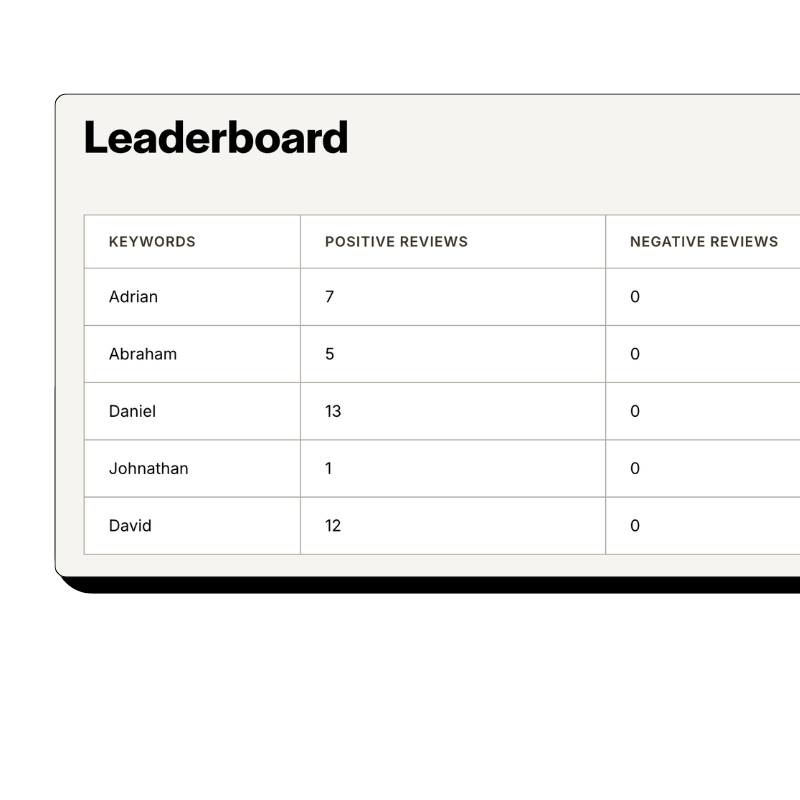
AI review responses for busy medical practices
Busy medical practices use AI to generate professional review responses across all platforms while physicians focus on patient care. The system creates personalized, HIPAA-compliant responses that acknowledge patient feedback without revealing medical information or violating privacy regulations. Each response matches your practice's professional tone and addresses specific concerns mentioned in reviews. Physicians can review and approve responses before publishing or enable automatic posting for efficiency. This approach ensures every patient review receives acknowledgment, which improves Google rankings and demonstrates responsiveness to prospective patients researching your practice. The AI understands medical terminology and regulatory requirements specific to healthcare communications.
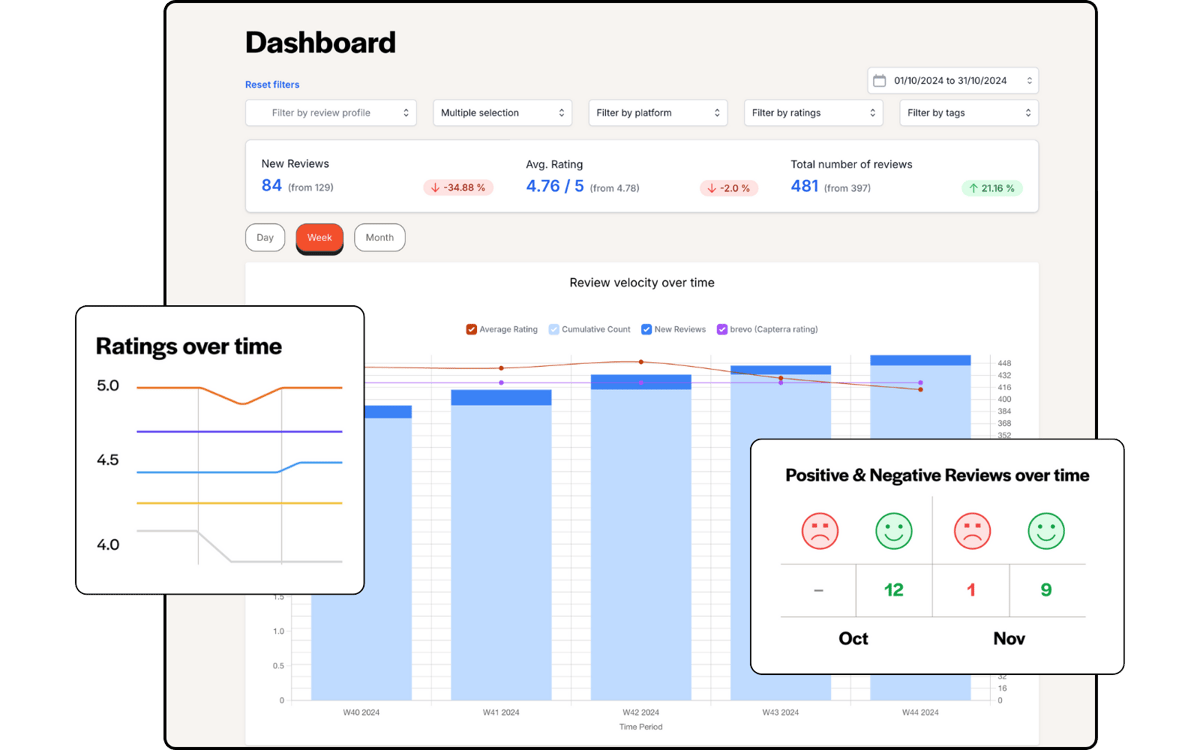
Medical practice review analytics and reporting
Medical practice review analytics track patient satisfaction trends, physician performance, and reputation metrics across multiple locations and specialties. Custom reports filter data by individual doctors, service types, patient demographics, and time periods to identify patterns in patient feedback. Key metrics include review conversion rates, average ratings by physician, response times to patient concerns, and sentiment analysis of common topics like wait times, bedside manner, and appointment scheduling. These reports automatically email practice managers weekly or monthly, providing actionable insights for staff training, operational improvements, and patient experience initiatives. The analytics help practices understand which factors most influence patient satisfaction and referral patterns.

1 tools we connect with
Pull contacts out of the software you already run, and send review requests from it.

No match for that search.
Tell us what you run your business on and we'll hook it up.
Start replying today
Your review history imports the moment you connect, so there is something to reply to from the first minute.
FAQs
Which review sites are most important for doctors?
Google Reviews is the most critical platform for doctors because patients discover physicians through local search, but healthcare-specific sites like Healthgrades, Zocdoc, Vitals, and WebMD are equally important for final decision-making. These medical platforms allow patients to filter by specialty, insurance, location, and medical conditions before booking appointments. Healthgrades reaches over 80% of patients researching doctors online, while Zocdoc directly feeds appointment bookings for practices accepting online scheduling. Reviewflowz monitors all major healthcare review platforms plus 200+ additional sites, ensuring complete visibility into patient feedback across the digital landscape where potential patients research physicians.
How do you measure review success for a medical practice?
Review success for medical practices is measured by conversion rate, which divides total reviews collected by actual patient visits, not just total review count. A practice with 150 reviews from 10,000 patients (1.5% conversion) is underperforming compared to one with 80 reviews from 2,000 patients (4% conversion). The average review conversion rate across Reviewflowz medical practice customers is 7.5%. Other key metrics include average rating trends by physician, response time to negative reviews, and sentiment analysis of patient feedback topics like wait times, bedside manner, and appointment scheduling. These metrics provide actionable insights for improving patient experience and practice operations.
Can medical practices automate HIPAA-compliant review responses?
Yes, medical practices can automate HIPAA-compliant review responses using AI that understands healthcare privacy regulations. The system generates professional responses that acknowledge patient feedback without revealing medical information, treatment details, or violating patient privacy. Each response follows HIPAA guidelines while addressing specific concerns mentioned in reviews. Physicians can review and approve responses before publishing or enable automatic posting for efficiency. The AI avoids medical terminology that could imply treatment relationships and focuses on thanking patients for feedback and inviting private discussion of specific concerns. This ensures every review receives acknowledgment while maintaining full regulatory compliance.
How are review requests triggered from medical practice software?
Review requests are triggered automatically when specific events occur in your practice management system, such as completed appointments, finished treatments, or patient check-outs. The integration monitors your medical software for these trigger events and immediately sends review requests via email, SMS, or WhatsApp without manual staff intervention. Setup requires configuring the trigger event and preferred communication channel once, then the system runs automatically in the background. This timing captures patients when their experience is fresh and satisfaction is highest, resulting in higher response rates than delayed manual follow-up. WhatsApp requests achieve nearly 98% open rates compared to 20% for email.
What does review management cost for medical practices?
Review management for medical practices costs $5 per 1,000 email requests and $5 per 100 SMS requests on a pay-as-you-go basis with no monthly minimums or contracts. For most practices, this translates to just pennies per review collected. A practice sending 500 review requests monthly via email would pay $2.50, while SMS requests for the same volume would cost $25. WhatsApp pricing varies by country but delivers nearly 98% open rates. The minimal cost is negligible compared to patient acquisition costs averaging $200-400 per new patient, making review management one of the most cost-effective marketing investments for medical practices.
How do you attribute reviews to individual physicians?
Reviews are attributed to individual physicians automatically using appointment data from your practice management system, eliminating the need for patients to mention doctor names. The system connects patient visit records to subsequent reviews based on timing and patient identifiers, providing accurate attribution without name-dropping that often triggers spam filters. This approach prevents misspelled physician names and reduces review removal by platforms. Each doctor receives individual performance dashboards showing review counts, ratings, and patient feedback specific to their care. Practice managers can generate automated monthly reports comparing physician performance and identifying coaching opportunities based on actual patient feedback data.
Which practice management systems integrate with review management?
Review management platforms integrate with leading practice management systems and EMR platforms to automatically trigger review requests from patient visit data. Common integrations include Epic, Cerner, Allscripts, athenahealth, eClinicalWorks, and many specialty-specific systems like Medinformatix. The integration connects to appointment scheduling, patient check-out, and visit completion events to trigger automatic review requests. Setup typically takes under 15 minutes with no developer required, using secure API connections that protect patient data. Check integration directories to verify compatibility with your current practice management software before implementation.