
Review Management Software for CollaborateMD users
Automatically request Google and Healthgrades reviews when patient encounters close in CollaborateMD. No manual follow-up required.
They love how easy we've made it






Automated review requests from CollaborateMD patient encounters
Review requests trigger automatically when you complete visits, process discharges, or finish follow-ups in CollaborateMD. The system sends email, SMS, or WhatsApp requests to patients within minutes of closing their encounter record. No staff training needed since it works behind the scenes using your existing clinical workflow. Set your triggers once and every qualified patient receives a Google, Healthgrades, or Vitals review request without anyone remembering to send it. Our CollaborateMD customers average 7.5% review conversion across all request methods.

Flag 5-star patients in CollaborateMD for referral opportunities
When patients leave 5-star reviews, that positive feedback appears directly in their CollaborateMD patient record for future visits. Your front desk and clinical staff instantly know which patients are your biggest advocates during check-ins or follow-up appointments. Ask these promoters for case study participation, video testimonials, or referrals to friends and family while they're physically in your office. This patient sentiment data flows automatically from review platforms back into CollaborateMD, so high-satisfaction patients get flagged without anyone manually tracking review scores.

See what is actually moving your rating
Connect one location and look at your own data. About five minutes, and your review history comes with it.
Track CollaborateMD provider reviews without patient name-drops
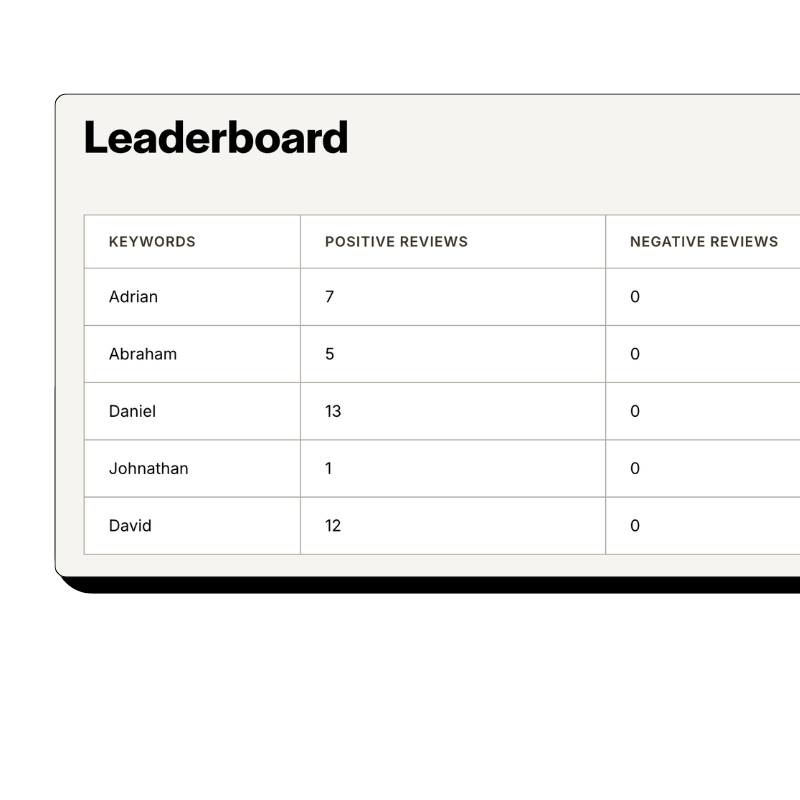
Review attribution happens automatically using CollaborateMD encounter data rather than asking patients to mention provider names. When Dr. Smith completes a visit in CollaborateMD and the patient later leaves a Google review, that review gets attributed to Dr. Smith without the patient writing his name. This prevents Google from flagging reviews that mention specific staff members, which happens frequently with traditional name-drop requests. You get clean per-provider analytics showing which physicians generate the most patient reviews while keeping the actual review text natural and compliant.
Calculate review conversion rate from CollaborateMD encounters
True review performance means comparing reviews collected against total patient encounters, not just counting raw review numbers. CollaborateMD integration lets Reviewflowz calculate your actual conversion rate: 45 reviews from 600 encounters equals 7.5%, which beats a competitor with 120 reviews from 3,000 encounters at 4%. You can filter this data by individual providers, date ranges, or specific clinical departments. Most practices discover their conversion rate is much lower than expected, but now you have the real metric that matters for growing your online reputation.
AI review replies across Google, Healthgrades, and medical sites
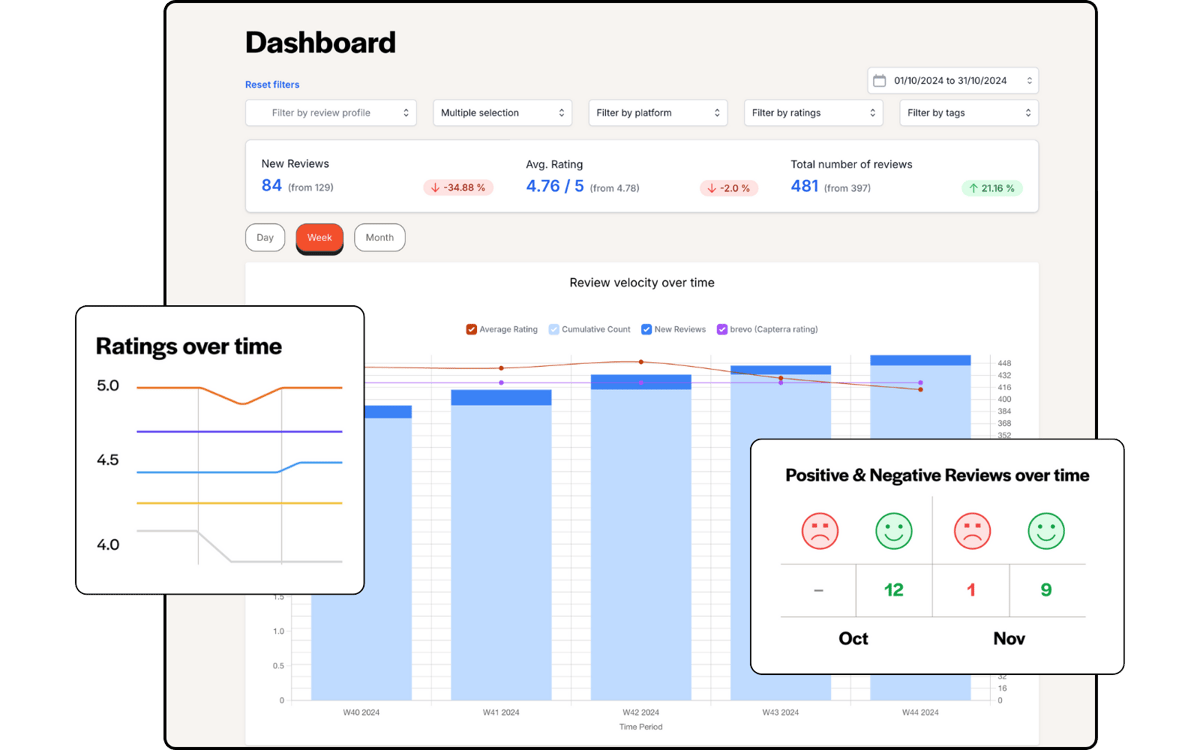
Every review receives an AI-generated response that matches your practice's tone across Google, Healthgrades, Vitals, Zocdoc, and 200+ other platforms. The AI learns your brand voice and clinical communication style to create appropriate responses for both positive testimonials and negative feedback. You can approve each reply before it publishes or let them post automatically after reviewing the AI's pattern. Consistent review responses improve your local search rankings and show potential patients that you actively engage with feedback, but without requiring physicians to spend time writing individual replies between patient appointments.

Start replying today
Your review history imports the moment you connect, so there is something to reply to from the first minute.
FAQs
Which review sites should CollaborateMD practices prioritize?
Google Reviews drives the most local search traffic for medical practices, but healthcare-specific platforms like Healthgrades, Vitals, and Zocdoc carry significant weight with patients researching providers within their specialty networks. These medical review sites often appear in insurance provider directories and specialty searches where patients compare EHR-enabled practices. WebMD and RateMDs also matter for certain specialties. Reviewflowz monitors all major healthcare review platforms plus 200+ additional sites from one dashboard, so you can track patient feedback across the entire medical review ecosystem without checking multiple platforms manually.
How do I measure review performance for my CollaborateMD practice?
Review conversion rate is reviews collected divided by total patient encounters from CollaborateMD, not just raw review counts. A practice with 60 reviews from 800 encounters has a 7.5% conversion rate, which significantly outperforms a competitor with 200 reviews from 8,000 encounters at 2.5%. Reviewflowz automatically calculates this metric using your CollaborateMD patient data and breaks it down by provider, time period, and clinical department. This gives you the actual performance indicator that correlates with practice growth rather than vanity metrics.
How does CollaborateMD trigger review requests automatically?
Review requests send automatically when specific CollaborateMD events occur: visit completions, patient discharges, or follow-up appointments marked finished. You configure these triggers once during setup by selecting which clinical workflows should prompt review requests and whether to use email, SMS, or WhatsApp delivery. When a provider closes a patient encounter that matches your criteria, Reviewflowz sends the review request within minutes using patient contact information from CollaborateMD. No manual intervention required from clinical or administrative staff.
Can CollaborateMD practices use WhatsApp for review requests?
Yes, WhatsApp review requests work with CollaborateMD integration and achieve nearly 98% open rates compared to roughly 20% for email. WhatsApp requests trigger from the same CollaborateMD events as email and SMS: completed visits, discharges, or finished follow-ups. The system sends WhatsApp messages using patient phone numbers from CollaborateMD records. WhatsApp pricing varies by country but follows the same pay-as-you-go model with no monthly minimums. Many practices find WhatsApp especially effective for younger patient demographics who prefer messaging over email.
How does provider attribution work with CollaborateMD data?
Provider attribution uses CollaborateMD encounter records to automatically assign reviews to the correct physician, nurse practitioner, or clinical staff member without requiring patients to mention names in their reviews. When Dr. Johnson completes a patient visit in CollaborateMD and that patient later submits a Google review, the system attributes that review to Dr. Johnson using the encounter data. This eliminates Google's tendency to flag reviews that specifically name staff members while still giving you detailed per-provider performance analytics and leaderboards based on actual clinical workflows.
How long does CollaborateMD integration setup take?
Setup takes under 15 minutes with no developer or IT team required. Connect your CollaborateMD system to Reviewflowz, select which encounter types should trigger review requests, choose your preferred messaging method, and configure your review request templates. Your first automated review request will send the same day someone completes a qualifying patient encounter in CollaborateMD. The integration works immediately without disrupting existing clinical workflows or requiring staff training on new processes.
What do review requests cost for CollaborateMD practices?
Email review requests cost $5 per 1,000 sends and SMS costs $5 per 100 messages on a pay-as-you-go basis with no monthly minimums or long-term contracts. For most CollaborateMD practices seeing 200-500 patients monthly, this works out to $2-8 per month depending on your patient volume and preferred messaging method. WhatsApp pricing varies by country but follows the same flexible credit system. You only pay for actual review requests sent, so practices with seasonal patient fluctuations aren't locked into fixed monthly fees during slower periods.