
Review Management Software for Cerner users
Turn every completed visit, discharge, and follow-up in Cerner into automatic review requests across Google, Healthgrades, and 200+ platforms.
They love how easy we've made it






How to automatically request reviews from Cerner patients
Reviewflowz connects directly to your Cerner system and sends review requests automatically when visits complete, patients discharge, or follow-ups finish. Configure your trigger event once in Cerner, choose email, SMS, or WhatsApp delivery, and every qualifying patient receives a review request without manual work. No more forgotten follow-ups or missed opportunities to collect feedback. The system monitors Cerner status changes in real-time and delivers requests within minutes of encounter completion. This automation ensures consistent review collection regardless of staff workload or busy clinical schedules.
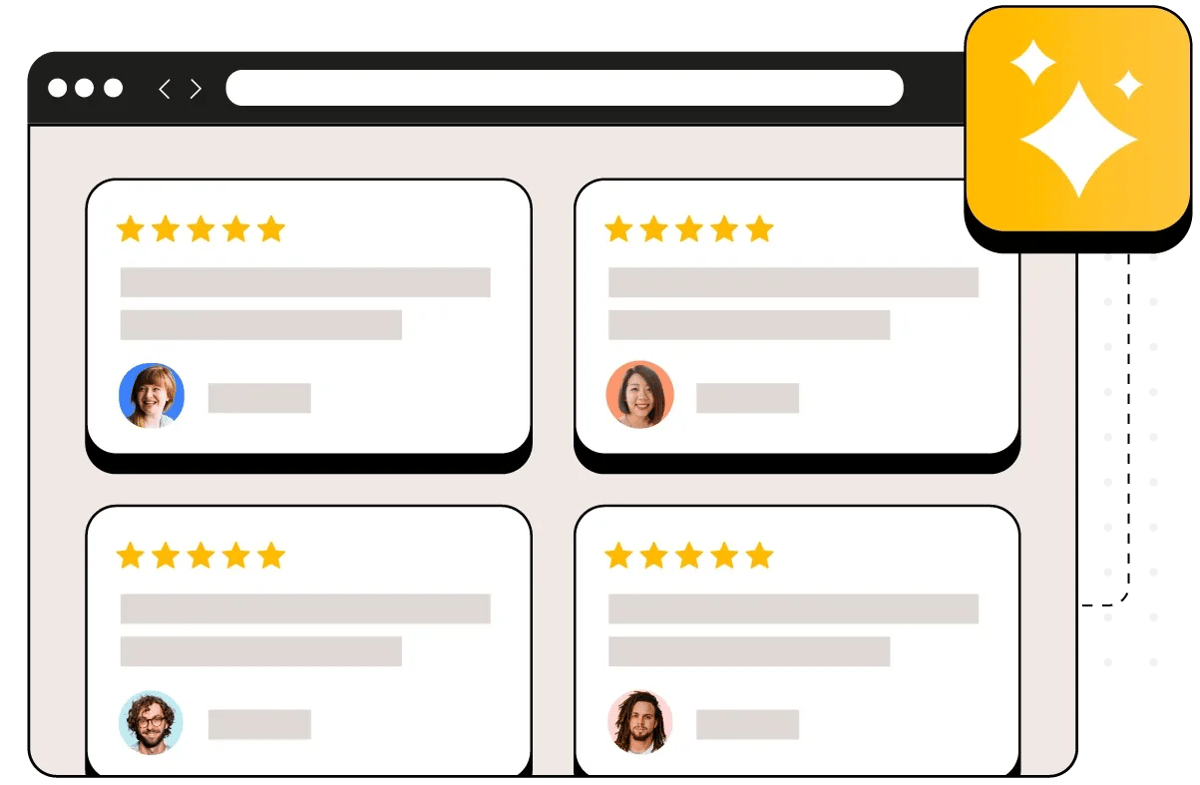
Track your best patients and promoters in Cerner
When patients leave 5-star reviews on Google or Healthgrades, that positive feedback gets flagged directly in their Cerner medical record. Your front desk and clinical staff instantly see which patients are strong advocates for your practice. Use this data to identify candidates for video testimonials, referral requests to family members, or participation in case studies. The integration works across 200+ review platforms, so whether reviews appear on Zocdoc, Vitals, or WebMD, the positive signals flow back into Cerner. This patient satisfaction data helps staff provide more personalized service during future visits.

See what is actually moving your rating
Connect one location and look at your own data. About five minutes, and your review history comes with it.
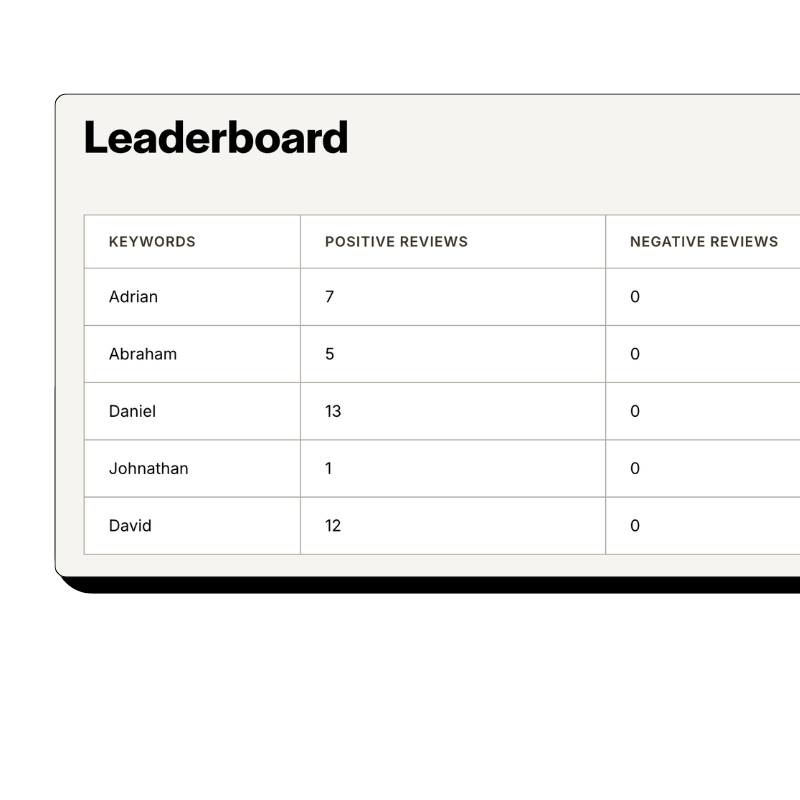
Cerner staff review attribution without patient name-drops
Reviewflowz automatically attributes patient reviews to the correct doctor, nurse, or provider using Cerner encounter data instead of requiring patients to mention names. This approach prevents Google from flagging reviews that contain staff names while still giving you per-provider performance tracking. When reviews arrive on any of 200+ platforms, the system matches them to providers based on documented patient encounters in Cerner. You get detailed performance insights, coaching opportunities, and provider leaderboards without asking patients to remember or spell staff names correctly. Reviews read more naturally and face fewer removals.
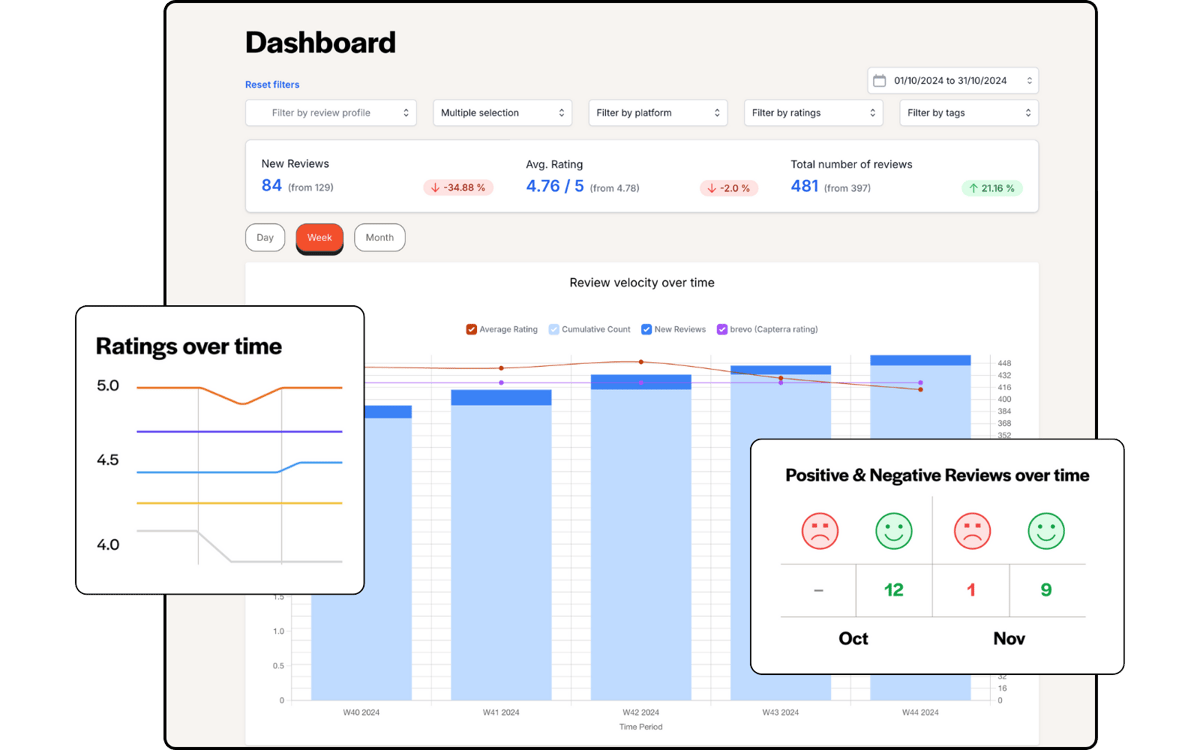
Calculate review conversion rate from Cerner patient volume
Most medical practices count total reviews, but the real metric is reviews per patient encounter. A practice with 200 reviews from 15,000 patients has a 1.3% conversion rate, while a competitor with 80 reviews from 2,000 patients achieves 4%. Because Reviewflowz integrates with Cerner, it calculates your exact conversion rate using real patient encounter data. You see metrics like: 450 patient visits this month, 34 reviews collected, 7.6% conversion rate. This percentage is what you optimize against, not raw review counts. Compare your 7.6% to the average Reviewflowz customer rate of 7.5% and track improvement over time.
AI auto-reply to patient reviews from Cerner data
Reviewflowz generates personalized responses to every patient review using AI trained on your practice's voice and Cerner encounter data. The system replies automatically across Google, Healthgrades, Zocdoc, Vitals, and 200+ other platforms, or queues responses for your approval. Replying to reviews improves local search rankings and builds trust with future patients, but most physicians lack time between Cerner workflows and patient care. The AI understands medical terminology, HIPAA compliance requirements, and appropriate healthcare communication styles. Every review gets a professional response that reinforces your practice's reputation and encourages patient retention.

Start replying today
Your review history imports the moment you connect, so there is something to reply to from the first minute.
FAQs
What review platforms matter most for Cerner healthcare practices?
Google Reviews ranks as the top priority because it directly affects local search visibility and patient discovery, but healthcare-specific platforms like Healthgrades, Zocdoc, Vitals, WebMD, and RateMDs provide crucial industry credibility. These medical review sites frequently appear in search results when patients research providers and influence referral decisions from other healthcare professionals. Patients often check multiple sources before booking appointments, making multi-platform reputation management essential. Reviewflowz monitors all these platforms plus 200+ others from one dashboard, ensuring comprehensive coverage across every channel that impacts patient acquisition for Cerner-using practices.
How do I measure review performance for my Cerner practice?
The key metric is review conversion rate, calculated as total reviews divided by total patient encounters, not raw review counts. Most healthcare practices focus on accumulating reviews without considering volume context. A practice with 40 reviews from 4,000 Cerner encounters (1%) underperforms compared to one with 25 reviews from 1,200 encounters (2.1%). Because Reviewflowz integrates directly with Cerner, it automatically calculates this conversion rate using your actual patient encounter data. You can compare your performance against the average Reviewflowz customer rate of 7.5% and track improvements month over month.
How does Reviewflowz send review requests from Cerner?
Reviewflowz monitors your Cerner system for specific status changes like completed visits, patient discharges, or finished follow-ups. When these trigger events occur, the system immediately sends a personalized review request to that patient via your chosen channel: email, SMS, or WhatsApp. You configure the trigger event and communication preferences once during setup, then every qualifying patient automatically receives a request without staff intervention. The integration works in real-time, so requests typically go out within minutes of encounter completion in Cerner. This automation ensures consistent review collection regardless of clinical workload.
Does Reviewflowz support WhatsApp for Cerner patient requests?
Yes, Reviewflowz offers WhatsApp review requests alongside email and SMS options for Cerner-integrated practices. WhatsApp achieves nearly 98% open rates compared to approximately 20% for email, making it highly effective for patient engagement. These WhatsApp requests trigger automatically when Cerner encounters complete, discharge, or finish, just like email and SMS functionality. Pricing varies by country but operates on the same pay-as-you-go model with no monthly minimums. The higher engagement rates often justify the slightly higher per-message cost, especially for practices wanting maximum review collection from their Cerner patient interactions.
Can I track which providers get the most reviews in Cerner?
Reviewflowz automatically tracks review attribution for every doctor, nurse, and provider through its direct Cerner integration. When patients leave reviews on any of 200+ platforms, the system matches them to the correct provider using documented encounter data from your Cerner EHR. This eliminates the need for patients to mention staff names, which often triggers Google's review removal algorithms. You get detailed per-provider performance dashboards, coaching insights, and leaderboards while protecting your reviews from name-flagging issues. The attribution works across Google, Healthgrades, Zocdoc, and all other monitored platforms automatically.
How long does Cerner integration setup take with Reviewflowz?
Setup typically completes in under 15 minutes with no developer or IT support required. Simply connect your Cerner system to Reviewflowz, select your preferred trigger events (like completed visits or discharges), choose your communication channel (email, SMS, or WhatsApp), and configure your message templates. The integration goes live immediately, with your first automated review requests sending the same day. The system requires no ongoing maintenance once configured, as it automatically monitors Cerner for trigger events and sends requests without staff intervention. Most practices start collecting additional reviews within 24 hours of setup completion.
What do Cerner review requests cost through Reviewflowz?
Email review requests cost $5 per 1,000 sends and SMS requests cost $5 per 100 messages on a pay-as-you-go basis with no monthly minimums or contracts. For most Cerner-using healthcare practices, this translates to just pennies per review collected. WhatsApp pricing varies by country but operates on the same flexible credit system. With the average review conversion rate of 7.5% across Reviewflowz customers, 1,000 email requests typically generate about 75 reviews for $5, making the cost per review extremely low. You only pay for messages sent, not for the software platform or Cerner integration itself.