
Review Management Software for AthenaPractice users
Turn every completed visit in AthenaPractice into an automatic review request. Track which providers generate the most 5-star reviews.
They love how easy we've made it






Automated review requests after AthenaPractice visits
When you mark a visit complete, discharge a patient, or finish a follow-up in AthenaPractice, Reviewflowz automatically sends that patient a review request via email, SMS, or WhatsApp. The system detects these workflow triggers in real-time and initiates outreach without any manual steps from your staff. You configure it once during the 15-minute setup, then every single patient encounter becomes a review opportunity. No more forgetting to ask satisfied patients, no more training staff on review collection protocols, no more manual tracking of who got asked and who didn't. The automation runs continuously in the background while your team focuses on clinical care.

Identify your best patients directly in AthenaPractice
Your happiest patients who leave 5-star reviews get automatically flagged inside their AthenaPractice patient records. This means during routine appointments, your clinical staff can instantly see which patients are your biggest advocates before they even walk in the room. Use this intelligence strategically: ask these promoters for referrals to friends and family, request video testimonials for your website, or invite them to participate in case studies. Since the review data flows directly into your EMR workflow, you don't need separate systems or reports. Your most valuable marketing opportunities are identified exactly where your team works every day, turning routine patient encounters into referral generation opportunities.

See what is actually moving your rating
Connect one location and look at your own data. About five minutes, and your review history comes with it.
Provider review attribution without patient name-dropping
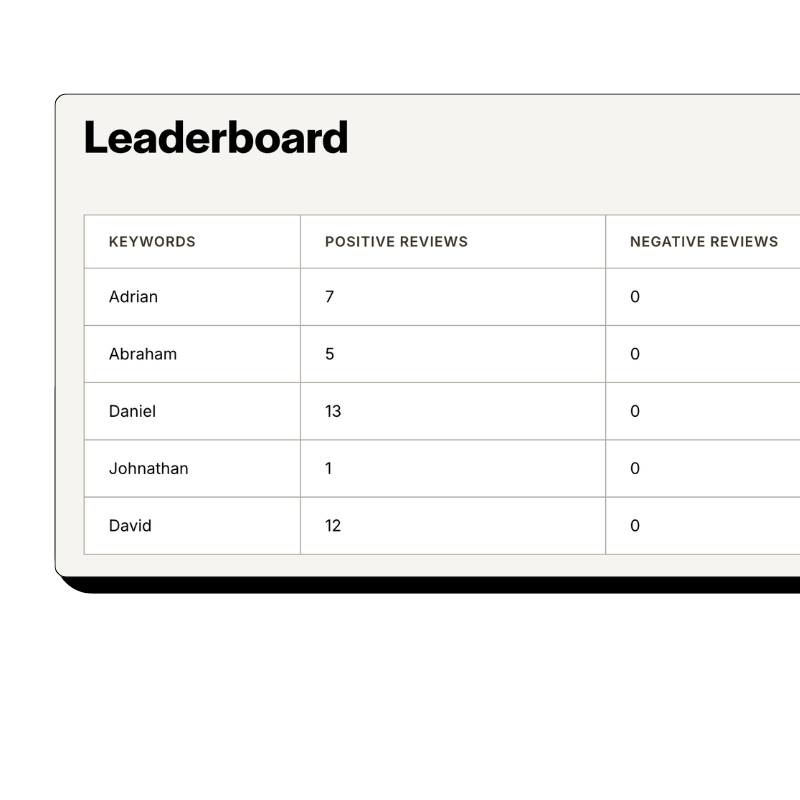
Reviewflowz automatically attributes each review to the correct physician, nurse practitioner, or provider using AthenaPractice encounter data, eliminating the need for patients to mention staff names. This approach prevents the common problem where Google flags and removes reviews that specifically name providers, which happens frequently when practices ask patients to mention their doctor. Since the system already knows from your EMR which provider handled each encounter, attribution happens behind the scenes when reviews come in. Your reviews read naturally without forced name-drops, fewer get removed by platform algorithms, and you still get detailed per-provider performance analytics showing which team members generate the most positive patient feedback.
Track review conversion rates from AthenaPractice encounters
Review conversion rate matters more than total review count because it reveals actual patient satisfaction performance. A practice with 80 reviews from 400 encounters has a 20% conversion rate, while another with 300 reviews from 5,000 encounters only converts at 6%. Because Reviewflowz connects to AthenaPractice encounter data, it automatically calculates your true conversion rate by dividing reviews received by actual patient visits completed. You see metrics like: 156 encounters this month, 23 reviews collected, 14.7% conversion rate. This EMR integration gives you the denominator most practices never track, turning vanity metrics into actionable performance data that shows which providers, locations, or service types generate the highest patient satisfaction.
AI-powered replies to medical practice reviews
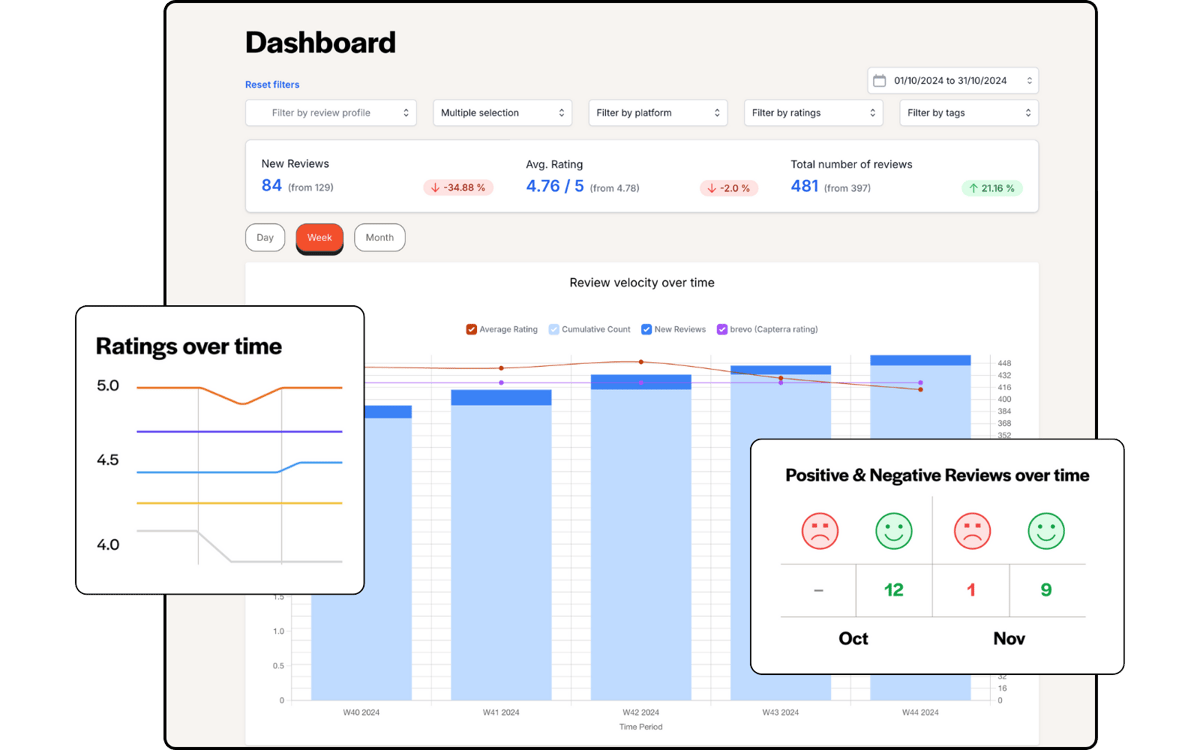
Every review across Google, Healthgrades, Zocdoc, and 200+ other platforms gets an AI-generated reply that sounds authentically medical and matches your practice voice. The system understands healthcare terminology and generates appropriate responses for both positive feedback and clinical concerns. You can review and approve each reply manually, or set them to publish automatically so no patient review goes unanswered while you're seeing patients or managing AthenaPractice workflows. Consistent review responses improve your Google local rankings and give prospective patients confidence in your practice management. The AI handles the time-consuming task of crafting thoughtful replies, letting you focus on patient care rather than social media management across multiple review platforms.

Start replying today
Your review history imports the moment you connect, so there is something to reply to from the first minute.
FAQs
What review platforms matter most for AthenaPractice practices?
Google Reviews is the top priority since it directly impacts local search rankings and patient discovery, but healthcare-specific platforms like Healthgrades, Vitals, Zocdoc, and WebMD are equally important for medical practices. These specialized platforms are where patients actively research providers and compare clinical credentials, making them essential for building domain authority in healthcare. Many patients also check specialty-specific sites depending on your practice type. Reviewflowz monitors all these critical medical review platforms plus 200+ others from one dashboard, ensuring you catch every piece of patient feedback that could impact your practice reputation and patient acquisition.
How do you measure review performance for EMR practices?
Review conversion rate is the key metric: total reviews divided by total patient encounters. A practice with 40 reviews from 200 patients (20% conversion) significantly outperforms one with 150 reviews from 3,000 patients (5% conversion). Most practices only track total review count, which is meaningless without knowing patient volume. Because Reviewflowz integrates with AthenaPractice encounter data, it automatically calculates your true conversion rate using actual visit completions, discharges, and follow-ups. This gives you the real performance metric that shows patient satisfaction levels rather than just practice size.
How do review requests trigger from AthenaPractice workflows?
Reviewflowz monitors specific AthenaPractice events: when you mark a visit as complete, discharge a patient, or finish a follow-up appointment. These EMR workflow triggers automatically initiate review requests to that patient via your chosen communication method (email, SMS, or WhatsApp). The system detects these status changes in real-time and sends requests without any manual intervention from your staff. You configure the timing and message content once during setup, then every patient encounter automatically generates a review opportunity. This EMR integration ensures no satisfied patients slip through the cracks because the requests are tied directly to your clinical workflows.
Does Reviewflowz support WhatsApp for medical practices?
Yes, WhatsApp review requests are fully supported with approximately 98% open rates compared to 20% for email, making it highly effective for patient engagement. WhatsApp requests work exactly like email and SMS options, automatically triggered when visits are completed, patients are discharged, or follow-ups are finished in AthenaPractice. The higher open rates often translate to better review conversion, especially for practices serving diverse patient populations who prefer WhatsApp communication. Pricing varies by country but follows the same pay-as-you-go model with no monthly minimums or long-term contracts.
Can you track individual provider review performance?
Yes, Reviewflowz automatically attributes each review to the specific physician, nurse practitioner, or provider who handled that patient encounter in AthenaPractice. This happens without patients needing to mention provider names in their reviews, which actually helps avoid Google's tendency to flag and remove reviews that specifically name staff members. The system pulls encounter data directly from your EMR to determine attribution, then generates detailed performance reports showing review counts, star ratings, and conversion rates for each provider. This gives practice managers clear visibility into which team members generate the highest patient satisfaction scores.
How long does AthenaPractice integration setup take?
Setup typically takes under 15 minutes with no developer or IT support required. You connect your AthenaPractice system to Reviewflowz, select which workflow triggers to use (visit completion, discharge, follow-up), choose your communication method (email, SMS, WhatsApp), and customize your review request message. The integration starts working immediately, with your first automated review requests going out the same day you complete setup. The connection is secure and HIPAA-compliant, designed specifically for healthcare EMR systems like AthenaPractice.
What does AthenaPractice review automation cost?
Email review requests cost $5 per 1,000 emails and SMS requests cost $5 per 100 SMS on a pay-as-you-go basis with no monthly minimums, contracts, or setup fees. For most AthenaPractice practices, this translates to just pennies per review collected. A practice sending 200 email requests monthly would pay $1, while 50 SMS requests would cost $2.50. WhatsApp pricing varies by country but follows the same pay-as-you-go model. You only pay for actual requests sent, making it cost-effective for practices of any size without the risk of unused monthly subscriptions.