
Review Management Software for Relatient users
Connect Reviewflowz to your Relatient system and automatically request reviews after every patient visit, appointment, or treatment completion.
They love how easy we've made it






Automated patient review requests from Relatient visits
Reviewflowz automatically sends review requests when patient encounters are marked complete in your Relatient system. Configure once to trigger requests after visits, treatments, discharges, or follow-ups, then every qualifying patient receives an email, SMS, or WhatsApp request without any manual work. Your front desk staff never needs to remember who to ask or when to ask them. The system handles timing, patient contact details, and delivery method based on your preferences. With Reviewflowz customers averaging 7.5% review conversion rates, this automated approach consistently outperforms manual review collection methods while saving your healthcare team hours of administrative work every week.
Identify your happiest patients in Relatient records
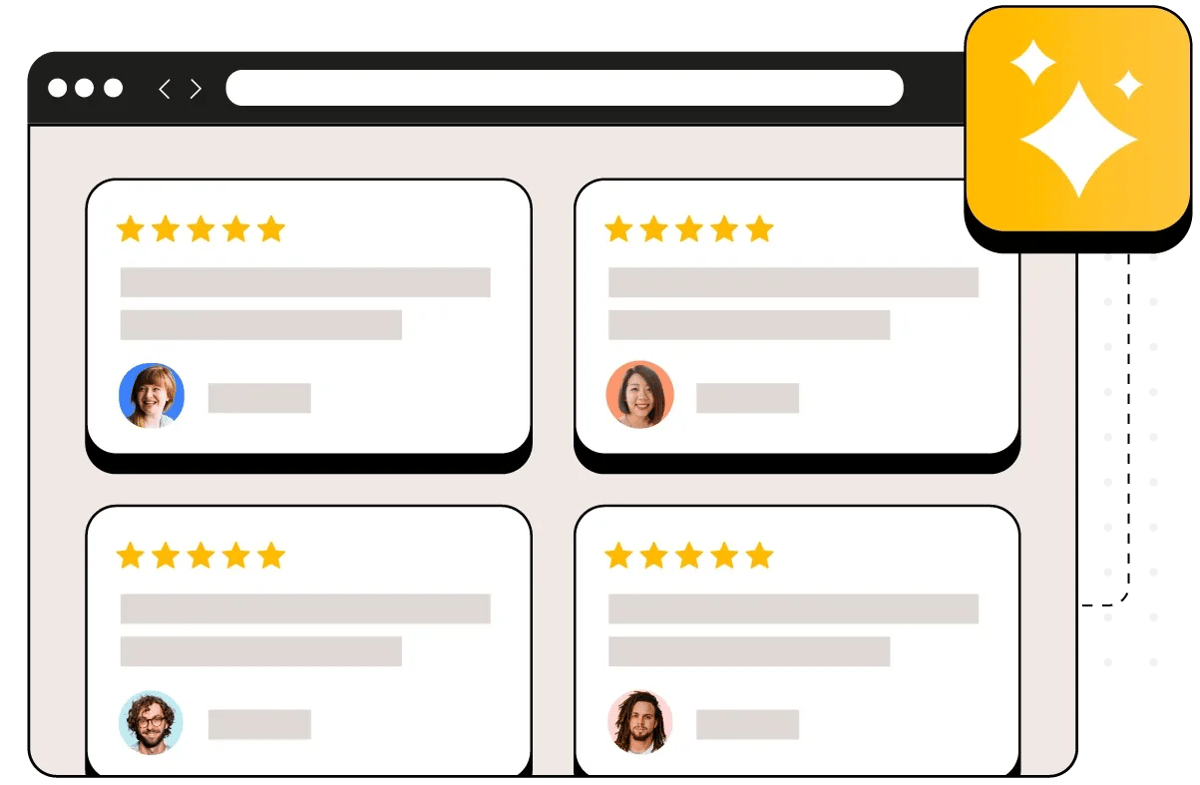
When patients leave 5-star reviews on Google, Healthgrades, or other platforms, that positive feedback automatically appears in their Relatient patient record. Your medical staff can instantly see which patients are your biggest advocates during check-ins, follow-ups, or future appointments. This visibility lets you strategically ask satisfied patients for referrals, video testimonials, or case study participation while their positive experience is top of mind. Instead of guessing which patients might recommend your practice, you have concrete data showing who already praised your care publicly. This patient satisfaction data becomes a powerful tool for building stronger relationships and generating word-of-mouth referrals.

See what is actually moving your rating
Connect one location and look at your own data. About five minutes, and your review history comes with it.
Track reviews by doctor without patient name-drops
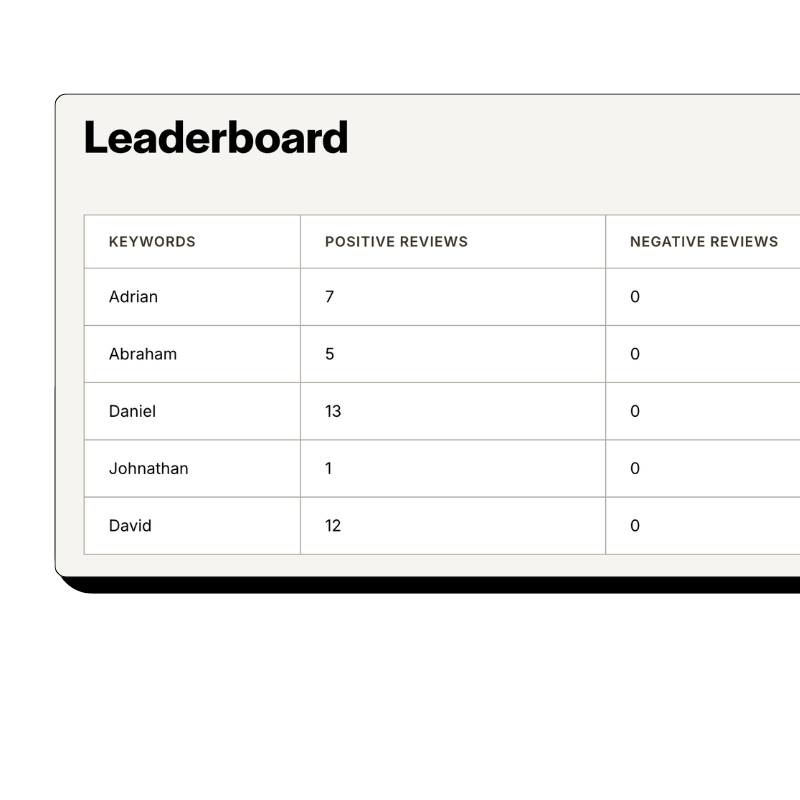
Reviewflowz attributes patient reviews to specific doctors, nurses, and staff members using your Relatient data rather than asking patients to mention provider names. This approach prevents the common problem where patients forget provider names, misspell them, or write reviews that get flagged by Google for seeming fake. Since the system already knows Dr. Smith handled the cardiology consultation and Nurse Johnson managed the follow-up care, incoming reviews get automatically assigned to the right team members. You get accurate performance tracking for each provider while your reviews sound natural and avoid platform removal policies. Generate detailed reports showing review volume and ratings per doctor, nurse, or department for performance evaluations and coaching opportunities.
Calculate review conversion rates from Relatient encounters
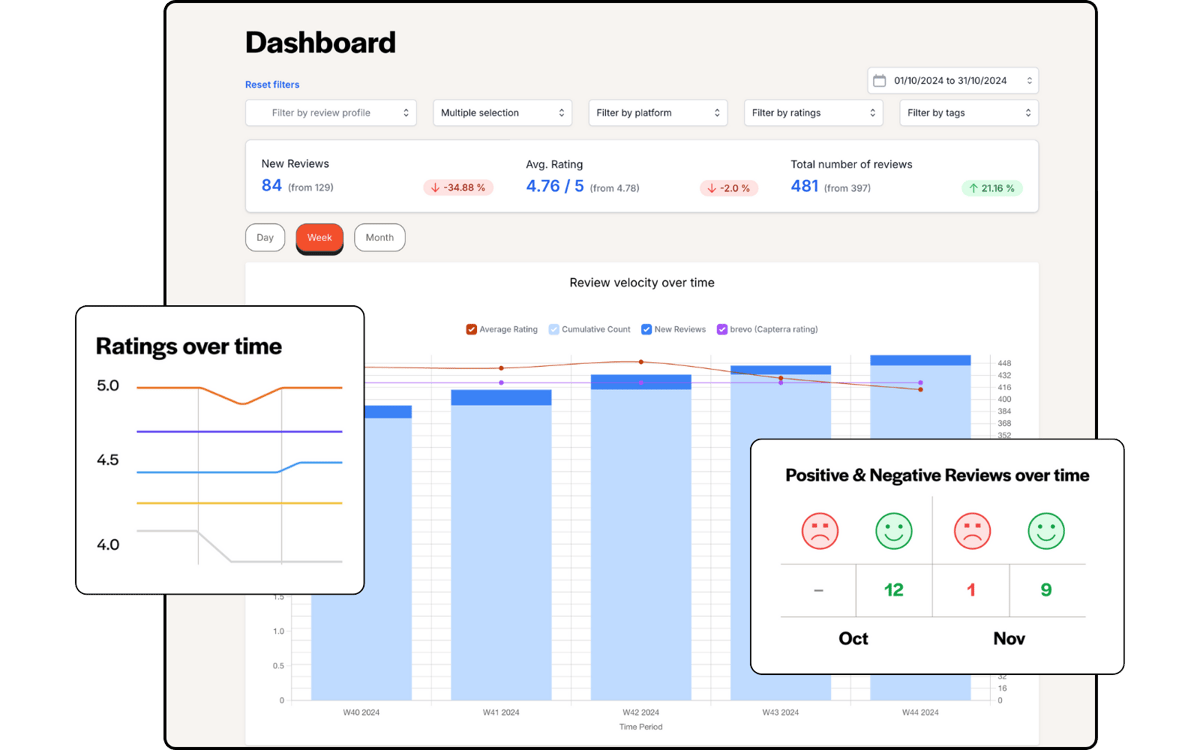
Most practices celebrate reaching 100 total reviews, but that number means nothing without context about patient volume. Reviewflowz connects to your Relatient system to track actual patient encounters, then calculates your true review conversion rate. A practice with 50 reviews from 500 patients achieves a 10% conversion rate that significantly outperforms a competitor with 200 reviews from 5,000 patients at just 4%. This metric reveals which locations, providers, or service lines generate the most patient advocacy relative to volume. You can benchmark against the 7.5% average conversion rate across Reviewflowz healthcare customers and identify specific improvement opportunities rather than just hoping for more reviews.
AI auto-replies to healthcare reviews on all platforms
Every patient review across Google, Healthgrades, Zocdoc, Vitals, and 200+ other platforms gets an appropriate response without physician time investment. The AI generates professional, healthcare-appropriate replies that thank patients for positive feedback and address concerns in negative reviews while maintaining HIPAA compliance. You can review responses before they publish or set them to auto-publish for hands-off reputation management. Consistent review responses improve your Google local search rankings and show prospective patients that your practice values feedback and patient communication. This systematic approach ensures no review goes unanswered, even when your medical team is focused on patient care rather than online reputation tasks.

Start replying today
Your review history imports the moment you connect, so there is something to reply to from the first minute.
FAQs
What review platforms matter most for Relatient healthcare practices?
Google Reviews drives the most patient acquisition since it directly impacts local search visibility, but healthcare-specific platforms like Healthgrades, Zocdoc, Vitals, and WebMD are equally important for medical practices. These specialized platforms often appear in top search results when patients research providers, procedures, or conditions, making them essential for comprehensive online presence. Patients frequently check multiple review sources before booking appointments, so maintaining strong ratings across both general and medical-specific platforms maximizes your practice's credibility. Reviewflowz monitors all critical healthcare review sites plus 200+ others, giving you complete visibility into patient feedback across every platform that matters for medical practice reputation management.
How do I measure review performance with Relatient integration?
Review conversion rate is the key metric, calculated by dividing total reviews by patient encounters from your Relatient system. A practice with 40 reviews from 800 patient visits achieves a 5% conversion rate, while another with 120 reviews from 6,000 visits only reaches 2% despite having more total reviews. Reviewflowz automatically pulls encounter data from Relatient to calculate this metric, showing which providers, locations, or service lines generate the most patient advocacy relative to volume. You can benchmark against the 7.5% average across Reviewflowz healthcare customers and track improvement over time rather than just celebrating raw review counts that lack meaningful context.
How are review requests triggered from Relatient workflows?
Reviewflowz monitors your Relatient system for specific trigger events like completed visits, finished treatments, patient discharges, or follow-up appointments. When these events occur, the system automatically sends review requests to patients via email, SMS, or WhatsApp based on your configuration. You select which Relatient workflow steps should trigger requests and choose your preferred communication method during initial setup. The automation runs continuously without staff intervention, ensuring every qualifying patient receives a review request at the optimal time. This systematic approach eliminates the manual work of remembering which patients to contact and when to ask for feedback.
Can Relatient practices send review requests via WhatsApp?
Yes, WhatsApp review requests are fully supported and achieve nearly 98% open rates compared to roughly 20% for email requests. This makes WhatsApp particularly effective for healthcare practices serving communities where WhatsApp is the primary communication platform. Review requests automatically send via WhatsApp when patient encounters complete in Relatient, just like email and SMS options. The higher engagement rates often translate to better review conversion, especially for practices with diverse patient populations who prefer WhatsApp over traditional communication channels. Pricing varies by country, but the improved response rates often justify the cost for practices seeking maximum review collection efficiency.
How does provider review attribution work with Relatient data?
Reviewflowz automatically assigns patient reviews to specific doctors, nurses, and healthcare staff by analyzing your Relatient encounter records rather than relying on patients to mention provider names. When Dr. Martinez handles a consultation and Nurse Thompson manages follow-up care, any resulting reviews get attributed to the correct team members without patients needing to remember or spell names correctly. This automatic attribution prevents reviews from being flagged by Google for mentioning specific providers, which often triggers removal. You get accurate performance tracking showing which providers generate the most positive patient feedback while maintaining natural-sounding reviews that comply with platform guidelines and avoid deletion.
How long does Reviewflowz setup take with Relatient?
Initial setup typically completes in under 15 minutes with no IT support or developer assistance required. You connect your Relatient system, select which workflow events should trigger review requests, choose your communication method, and configure any timing preferences. The integration immediately begins monitoring for trigger events, so your first automated review requests can go out the same day. Most healthcare practices are fully operational within one business day, including testing the workflow with a few sample patient encounters to ensure proper functionality before full deployment across all providers and locations.
What do Relatient review requests cost per patient?
Email review requests cost $5 per 1,000 emails, while SMS requests cost $5 per 100 SMS, both on pay-as-you-go pricing with no monthly minimums or contracts. For most healthcare practices, this translates to just pennies per review collected. A practice sending 500 email requests monthly pays $2.50, while 100 SMS requests cost $5. WhatsApp pricing varies by country but often provides better conversion rates that offset higher per-message costs. The automated system eliminates staff time spent manually requesting reviews, making the cost-per-review extremely low compared to having team members personally ask patients for feedback during or after appointments.