
Review Management Software for CPSI users
Automatically trigger review requests from CPSI patient discharges and completed visits. Monitor Google, Healthgrades, and 200+ platforms from one dashboard.
They love how easy we've made it






Auto-send review requests from CPSI patient discharges
Reviewflowz monitors your CPSI system and automatically sends review requests when visits are completed, patients are discharged, or follow-ups are marked finished. Configure your triggers once in under 15 minutes and every qualifying patient receives a request via email ($5 per 1,000), SMS ($5 per 100), or WhatsApp (98% open rates). The system pulls patient contact information directly from CPSI records, eliminating manual data entry and ensuring no patient encounters are missed. Your clinical staff continues their normal CPSI workflow while review requests go out automatically in the background.

Flag your best patients in CPSI for referrals and testimonials
When patients leave 5-star reviews on Google or Healthgrades, that positive sentiment data flows back into their CPSI medical record automatically. Your care team sees exactly which patients are promoters during routine appointments and follow-ups. Use this intelligence to request referrals, ask for detailed testimonials, or invite them to participate in case studies. Since the data lives in CPSI alongside clinical notes, providers can act on these opportunities during natural patient interactions without separate tracking systems or manual processes.

See what is actually moving your rating
Connect one location and look at your own data. About five minutes, and your review history comes with it.
Attribute reviews to CPSI providers without name mentions
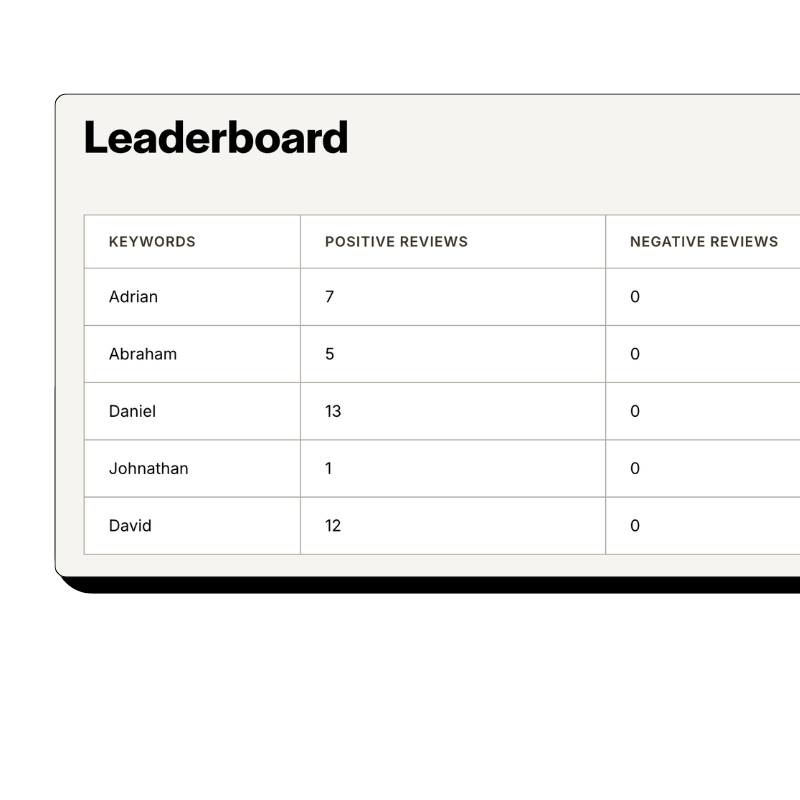
Most practices ask patients to mention their provider by name, but Google often flags these reviews as coached or unnatural. Reviewflowz uses your CPSI encounter data to automatically attribute incoming reviews to the correct physician, nurse practitioner, or specialist based on who was assigned to that patient visit. Reviews read more naturally without forced name-drops, reducing Google's removal rate while still providing per-provider performance analytics. Your CPSI provider assignment data becomes the attribution source, creating cleaner reviews and better tracking.
Track CPSI review conversion rates, not just total counts
A practice with 200 reviews from 10,000 patient encounters has a 2% conversion rate, while a competitor with 75 reviews from 1,000 encounters achieves 7.5%. The second practice dominates local search despite fewer total reviews. Reviewflowz connects to your CPSI patient volume data to calculate true conversion rates: total reviews divided by total encounters. Track performance by individual providers, specialties, or time periods using real CPSI encounter numbers. This metric reveals which providers excel at patient satisfaction and identifies opportunities for improvement across your practice.
AI auto-replies to every review across medical platforms
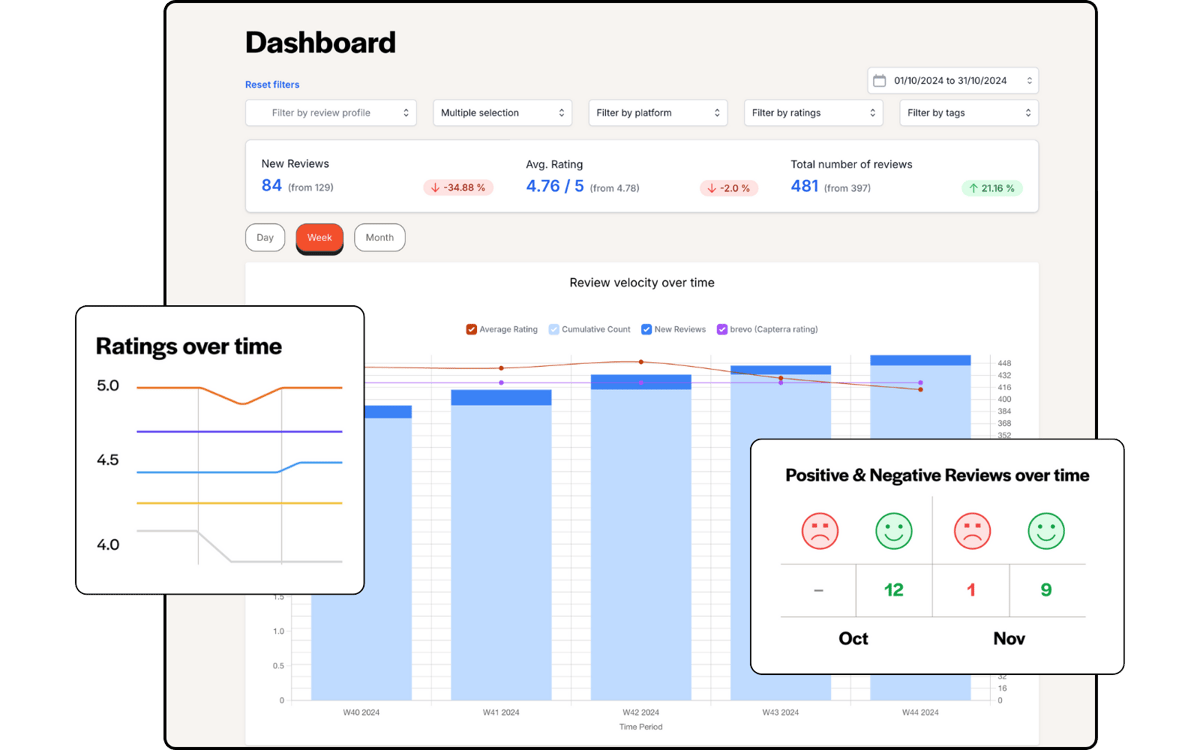
Responding to reviews improves Google rankings and builds patient trust, but physicians managing CPSI charts and clinical workflows lack time for manual replies. Reviewflowz AI generates professional responses across Google, Healthgrades, Vitals, Zocdoc, and 200+ other platforms using your practice's brand voice. The system handles both positive reviews (thanking patients professionally) and negative ones (offering private resolution). Set responses to auto-publish or require approval. Each reply maintains HIPAA compliance while addressing patient concerns and demonstrating your commitment to care quality.

Start replying today
Your review history imports the moment you connect, so there is something to reply to from the first minute.
FAQs
What review platforms matter most for CPSI practices?
Google Reviews is the top priority for any CPSI practice since it directly impacts local search visibility when patients search for providers in your area. However, healthcare-specific platforms like Healthgrades, Vitals, Zocdoc, and WebMD are equally important because they're where patients actively research physicians before scheduling appointments. These medical review sites carry significant authority in healthcare search results and influence patient trust in your clinical expertise. Reviewflowz monitors all these critical platforms plus 200+ others, giving your CPSI practice complete visibility across every channel that impacts patient acquisition and retention.
How do you measure review performance for CPSI practices?
The only meaningful metric is review conversion rate: total reviews divided by total patient encounters from your CPSI system. Raw review counts are misleading because they ignore patient volume. A practice with 150 reviews from 2,000 CPSI encounters (7.5% conversion) significantly outperforms one with 300 reviews from 20,000 encounters (1.5% conversion). Reviewflowz connects directly to CPSI to pull accurate encounter numbers and calculates this conversion rate automatically. You can track performance by individual providers, specialties, or time periods using real CPSI patient data.
How does Reviewflowz trigger review requests from CPSI?
Reviewflowz monitors specific events in your CPSI system and automatically sends review requests when those triggers occur. Common triggers include visit completion, patient discharge, or follow-up appointment marked finished. When CPSI records one of these events, Reviewflowz immediately pulls the patient's contact information and sends a review request via your chosen channel (email, SMS, or WhatsApp). You configure these triggers once during setup, then every qualifying patient receives a request automatically without any manual intervention from clinical staff.
Can CPSI practices send review requests via WhatsApp?
Yes, Reviewflowz supports WhatsApp review requests with 98% open rates compared to roughly 20% for email. WhatsApp requests are triggered automatically from CPSI events just like email and SMS when visits are completed or patients are discharged. This higher engagement rate often translates to better review conversion, especially for younger patient demographics. WhatsApp pricing varies by country but follows the same pay-as-you-go model with no monthly minimums or long-term contracts.
Can I track which CPSI providers generate the most reviews?
Yes, Reviewflowz automatically pulls provider assignment data from your CPSI encounter records, so incoming reviews are instantly attributed to the correct physician, nurse practitioner, or specialist. This CPSI-driven attribution eliminates the need for patients to mention provider names in reviews, which often triggers Google's spam detection. You get clean per-provider analytics showing review volume, conversion rates, and average ratings while maintaining natural-sounding reviews that stay live on Google and other platforms.
How long does CPSI integration with Reviewflowz take?
CPSI integration typically takes under 15 minutes with no developer or IT department involvement required. You simply connect your CPSI system, select your preferred trigger events (discharge, visit completion, etc.), choose your communication channels (email, SMS, WhatsApp), and you're live. Your first automated review request goes out the same day a qualifying patient event occurs in CPSI. The setup process is designed for practice managers and administrators, not technical specialists.
What do review requests cost for CPSI practices?
Review request emails cost $5 per 1,000 sends and SMS costs $5 per 100 sends on a pay-as-you-go basis with no monthly minimums or long-term contracts. For most CPSI practices, this translates to just a few cents per review collected. WhatsApp pricing varies by country but follows the same flexible credit system. You only pay for actual review requests sent, so practices with seasonal patient volume fluctuations aren't locked into fixed monthly fees during slower periods.