
Review Management Software for Medent users
Auto-request reviews when visits complete in Medent. Track which providers drive the most patient reviews across Google and Healthgrades.
They love how easy we've made it






Auto-send review requests when Medent visits complete
Reviewflowz detects completed visits, discharges, and follow-ups in your Medent system and instantly sends review requests via email, SMS, or WhatsApp. Configure once by selecting your trigger events and preferred messaging channels. Every qualifying patient automatically receives a Google, Healthgrades, or Zocdoc review request without manual work from your staff. No delays, no forgotten patients, no additional steps in your clinical workflow. The system works in the background while your team focuses on patient care, ensuring consistent review collection from every encounter.

Flag your happiest patients in Medent patient records
When patients leave 5-star reviews on Google or Healthgrades, that positive feedback flows directly into their Medent patient record as a flag or note. Your clinical staff immediately sees which patients are practice advocates during appointments and can ask them for referrals, video testimonials, or case study participation. This creates a closed loop between your reputation management and patient relationship strategy. Instead of guessing who might promote your practice, you have concrete data showing which patients already have. Turn your biggest fans into active referral sources.

See what is actually moving your rating
Connect one location and look at your own data. About five minutes, and your review history comes with it.
Track reviews by provider without mentioning names
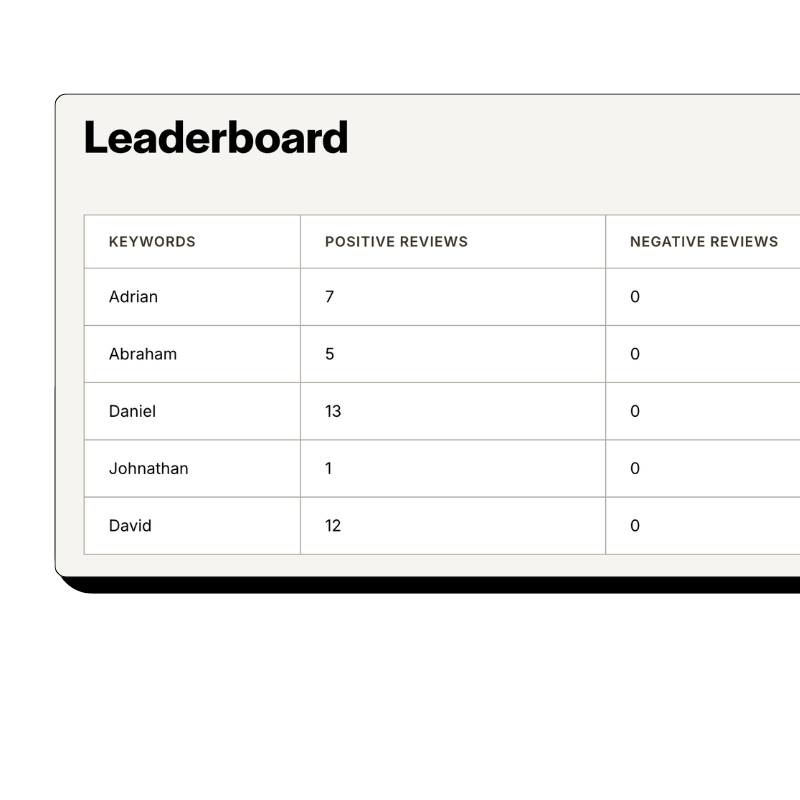
Most practices ask patients to mention their physician by name in reviews, but Google flags these reviews more frequently and patients often forget or misspell names. Reviewflowz pulls encounter data directly from Medent to automatically attribute each review to the correct provider who handled that visit. No patient name-dropping required. Reviews read naturally, fewer get removed by Google's systems, and you still get detailed per-provider performance data. Compare review generation between physicians, nurses, and specialists using actual patient encounter data rather than guesswork.
Calculate review conversion rates from Medent encounters
Raw review counts mean nothing without knowing your patient volume. A practice with 200 reviews from 10,000 encounters has a 2% conversion rate and is losing to a competitor with 100 reviews from 1,500 encounters at 6.7%. Because Reviewflowz connects to Medent, it calculates your true performance: total reviews divided by total patient encounters. See monthly reports showing 450 encounters, 34 reviews, 7.6% conversion rate. This is the metric that actually predicts online visibility and patient acquisition. Optimize against conversion rate, not raw numbers, for better business outcomes.
AI automatically replies to patient reviews
Responding to every review improves Google rankings and builds trust with future patients, but physicians don't have time to craft replies while managing charts and clinical workflows. Reviewflowz generates professional, on-brand responses using AI across Google, Healthgrades, Zocdoc, and 200+ other platforms. Set responses to auto-publish or require approval based on your comfort level. Thank patients for positive feedback, address concerns professionally, and maintain consistent engagement. No review goes unanswered, your online reputation stays active, and you save hours each week on manual review management tasks.

Start replying today
Your review history imports the moment you connect, so there is something to reply to from the first minute.
FAQs
Which review platforms matter most for medical practices using Medent?
Google Reviews dominates local search results, but medical practices must also monitor Healthgrades, Vitals, Zocdoc, and WebMD since patients actively research providers on these healthcare-specific platforms. These sites carry significant domain authority for medical searches and often appear in search results alongside Google listings. Reviewflowz monitors all major healthcare review platforms plus 200+ others from one dashboard, ensuring you capture patient feedback regardless of where they choose to leave it. Missing reviews on industry-specific sites can hurt your online visibility.
How do I measure review performance for my Medent practice?
Track review conversion rate, not total review count. Conversion rate equals reviews collected divided by patient encounters. A practice with 75 reviews from 1,500 encounters (5% conversion) significantly outperforms a competitor with 300 reviews from 12,000 encounters (2.5% conversion). Because Reviewflowz integrates with Medent, it automatically calculates this metric using your actual encounter data. This gives you a true performance benchmark to optimize against and compare with industry averages.
How are review requests sent from Medent automatically?
When specific events occur in Medent like completed visits, patient discharges, or finished follow-ups, Reviewflowz detects these triggers and immediately sends review requests via your chosen method: email, SMS, or WhatsApp. You configure the system once by selecting which Medent events should trigger requests and your preferred communication channel. After setup, every qualifying patient receives an automated review request without staff intervention. The integration works in real-time, so requests go out the same day as the completed encounter.
Can Medent practices send review requests via WhatsApp?
Yes, WhatsApp review requests are fully supported with nearly 98% open rates compared to roughly 20% for email. WhatsApp requests trigger automatically from Medent encounter completions, discharges, and follow-ups just like email and SMS options. The higher open rates often result in better review conversion, though WhatsApp pricing varies by country. You can mix channels or stick with one method based on your patient demographics and budget. All channels use the same Medent triggers and automation workflow.
How does provider attribution work with Medent review data?
Reviewflowz automatically pulls encounter records from Medent showing which physician, nurse practitioner, or specialist handled each patient visit. When reviews come in, they're attributed to the correct provider without requiring patients to mention names in their feedback. This prevents Google from flagging reviews that name-drop staff members while still giving you detailed per-provider performance analytics. You can track which providers generate the most reviews, highest ratings, and best conversion rates using real encounter data rather than manual tracking.
How long does Medent integration setup take?
Integration setup takes under 15 minutes with no developer or IT department required. You connect your Medent system to Reviewflowz, select which encounter events should trigger review requests, choose your messaging channel preference, and go live immediately. Your first automated review request sends the same day. The connection uses standard healthcare data protocols to ensure HIPAA compliance while maintaining real-time synchronization between your EHR and review management workflow.
What do Medent review requests cost per patient?
Email review requests cost $5 per 1,000 emails and SMS costs $5 per 100 messages on pay-as-you-go pricing with no monthly minimums or contracts. For most Medent practices, this works out to pennies per review collected. WhatsApp pricing varies by country but follows the same usage-based model. You only pay for messages actually sent, making it cost-effective for practices of any size. No upfront fees or long-term commitments required.