
Review Management Software for eMDs users
Turn every completed visit in eMDs into an automatic review request on Google, Healthgrades, and Vitals with zero manual work.
They love how easy we've made it






How to automatically send review requests from eMDs
Reviewflowz triggers review requests automatically when visits, discharges, or follow-ups are marked complete in your eMDs system. Configure once by selecting your trigger event (visit completion, discharge, follow-up) and communication method (email at $5 per 1,000 sends, SMS at $5 per 100 sends, or WhatsApp with 98% open rates). Every qualifying patient receives a personalized request for Google, Healthgrades, Vitals, Zocdoc, or WebMD reviews without staff intervention. Your team focuses on patient care while Reviewflowz handles review collection automatically from your existing eMDs workflow.

Track your best patients for referrals and testimonials
When patients leave 5-star reviews, that data flows directly back into their eMDs patient record as a flag visible during appointments. Your clinical staff immediately sees which patients are your strongest advocates without checking external review sites. Use this intelligence strategically: ask 5-star reviewers for video testimonials during their next visit, request referrals to family members, or invite them to participate in case studies. The best marketing comes from satisfied patients, but only if you can identify them quickly within your existing eMDs patient management system.

See what is actually moving your rating
Connect one location and look at your own data. About five minutes, and your review history comes with it.
Attribute reviews to providers without patient name-dropping
Reviewflowz automatically assigns reviews to the correct physician, nurse, or provider using eMDs encounter data instead of asking patients to mention names. This direct EHR integration eliminates the common problem of patients forgetting provider names, misspelling them, or triggering Google's spam filters when reviews specifically mention staff members. When reviews arrive on Google, Healthgrades, or other platforms, they read naturally while still being tracked to individual providers in your performance reports. You get accurate staff attribution and better review approval rates without compromising the patient experience.
Calculate review conversion rates from eMDs patient volume
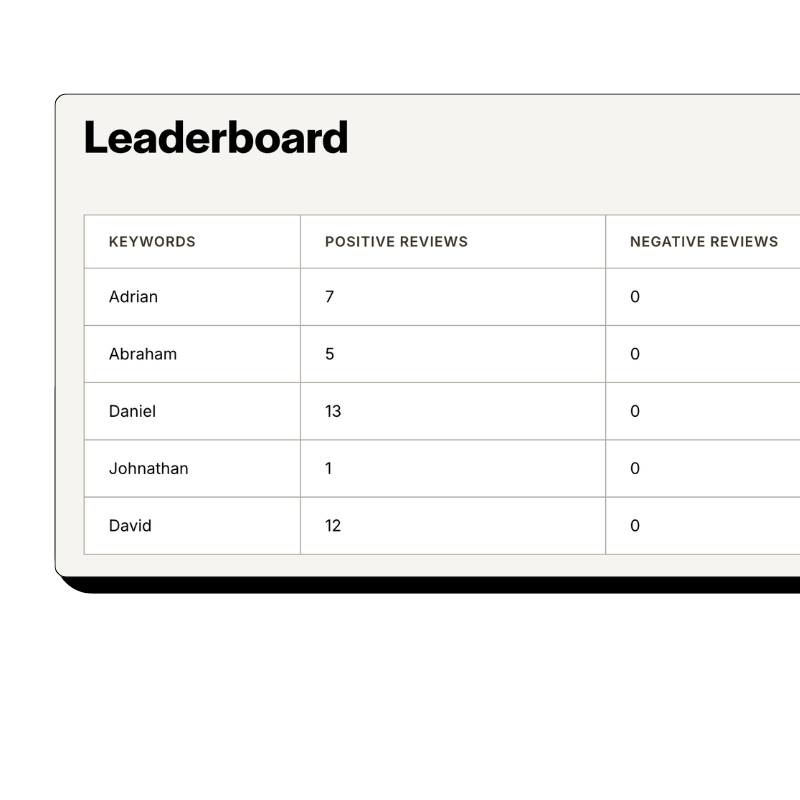
Most practices celebrate raw review totals, but 200 reviews from 8,000 patients (2.5% conversion) means you're underperforming compared to a competitor with 80 reviews from 800 patients (10% conversion). Reviewflowz pulls your actual patient encounter numbers directly from eMDs to calculate true review conversion rates. See exactly how many visits you completed versus reviews collected across Google, Healthgrades, and other platforms. The average Reviewflowz customer achieves 7.5% conversion rates. Track monthly performance by provider, location, and platform to optimize your review collection strategy based on real metrics.
AI auto-replies to patient reviews on medical sites
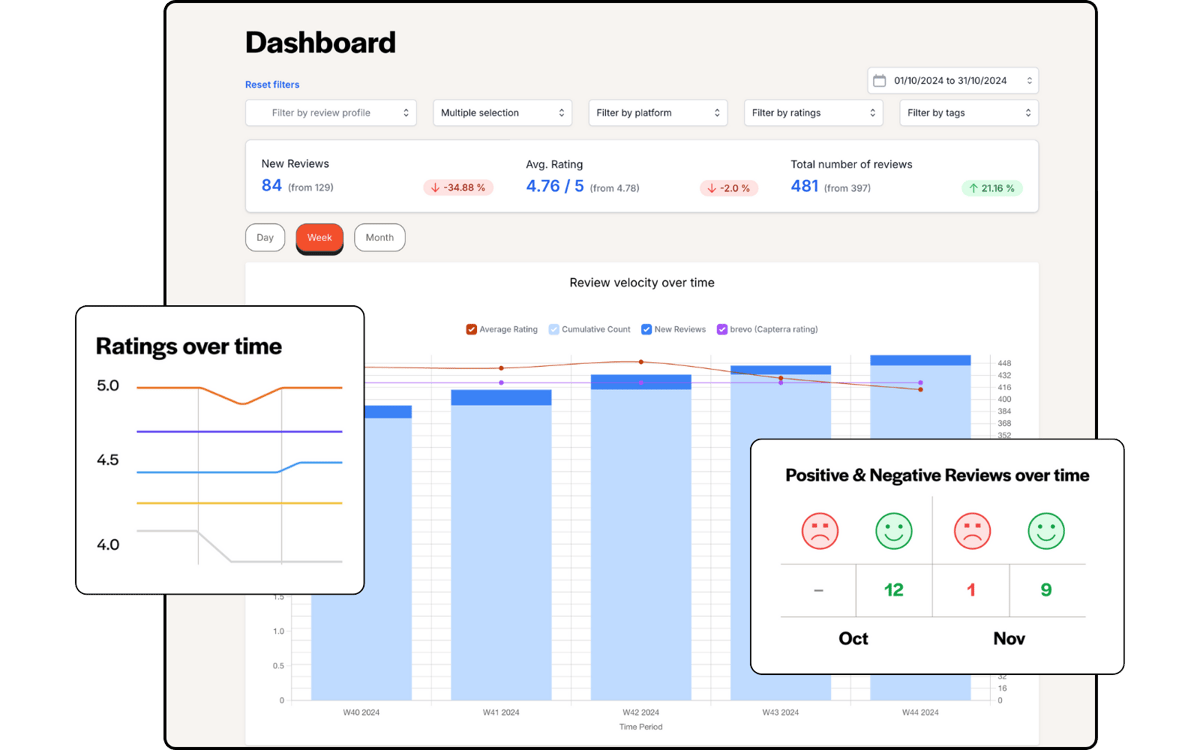
Responding to every review improves Google rankings and builds trust with prospective patients, but physicians managing full patient loads in eMDs don't have time to craft individual responses. Reviewflowz generates professional, on-brand replies using AI for Google, Healthgrades, Vitals, Zocdoc, Yelp, and 195+ other review platforms. The AI understands medical practice contexts and creates appropriate responses for both positive feedback and negative concerns. Set replies to auto-publish or require approval based on your comfort level. Either way, no patient review goes unanswered while you focus on clinical care.

Start replying today
Your review history imports the moment you connect, so there is something to reply to from the first minute.
FAQs
Which review sites matter most for medical practices using eMDs?
Google Reviews is the top priority for any medical practice since it directly impacts local search visibility when patients search for healthcare providers in their area. However, healthcare-specific platforms like Healthgrades, Vitals, Zocdoc, and WebMD are equally important because they target patients actively researching medical providers and carry significant weight in healthcare-related search results. These medical review sites often appear prominently when patients search for specific conditions, treatments, or provider types. Reviewflowz monitors all major healthcare review platforms plus 200+ additional sites from one dashboard, ensuring comprehensive coverage of where your potential patients discover and evaluate medical practices.
How do I measure review performance for my eMDs practice?
Review conversion rate is the only metric that matters, calculated by dividing total reviews by total patient encounters from your eMDs system. A practice with 75 reviews from 500 encounters (15% conversion) significantly outperforms one with 300 reviews from 5,000 encounters (6% conversion). Reviewflowz pulls your actual patient volume directly from eMDs to calculate accurate conversion rates by provider, location, and time period. The average Reviewflowz customer achieves 7.5% conversion rates across all platforms. Focus on improving this percentage rather than raw review counts, as conversion rate directly correlates with systematic review collection and patient satisfaction.
How are review requests sent from eMDs patient records?
When specific events occur in your eMDs system (visit completion, patient discharge, or follow-up completion), Reviewflowz automatically sends a review request to that patient via your chosen communication method. You select your trigger event and channel during initial setup, then the system handles everything automatically. Email requests cost $5 per 1,000 sends, SMS costs $5 per 100 sends, and WhatsApp (with 98% open rates) varies by country. All pricing is pay-as-you-go with no monthly minimums. Once configured, every qualifying patient receives a review request without any manual staff involvement or additional steps in your eMDs workflow.
Can I use WhatsApp for patient review requests from eMDs?
Yes, Reviewflowz supports WhatsApp review requests triggered automatically from eMDs patient encounters with nearly 98% open rates compared to approximately 20% for email. WhatsApp requests are sent using the same trigger system as email and SMS (visit completion, discharge, follow-up completion) with pricing that varies by country on the same pay-as-you-go model. The higher open rates make WhatsApp particularly effective for review collection, though you should verify that WhatsApp communication aligns with your practice's patient communication policies and any applicable healthcare communication regulations in your location.
How does provider review attribution work with eMDs integration?
Reviewflowz automatically tracks which physician, nurse, or provider treated each patient by pulling encounter data directly from your eMDs system, then attributes incoming reviews to the correct staff member without requiring patients to mention provider names. This eMDs integration eliminates patient confusion about provider names and reduces the risk of Google flagging reviews that specifically mention staff members. When reviews arrive on Google, Healthgrades, or other platforms, they appear natural and conversational while still being tracked to individual providers in your performance reports. You get accurate per-provider metrics without compromising review quality or approval rates.
How long does eMDs review management setup take?
Setup takes under 15 minutes with no developer or IT support required. Simply connect your eMDs system to Reviewflowz, select your trigger event (visit completion, discharge, follow-up), choose your communication method (email, SMS, or WhatsApp), and configure which review platforms to target (Google, Healthgrades, Vitals, etc.). Your first automatic review request is sent the same day when the next qualifying patient encounter is completed in eMDs. The integration works with your existing eMDs workflow without requiring staff training or changes to your current patient management processes.
What do eMDs review requests cost per patient?
Review request emails cost $5 per 1,000 sends and SMS costs $5 per 100 sends on a pay-as-you-go basis with no monthly minimums or long-term contracts. For most eMDs practices, this works out to pennies per review collected. WhatsApp pricing varies by country but follows the same flexible credit system. With the average Reviewflowz conversion rate of 7.5%, a practice sending 1,000 email requests would typically collect 75 reviews at a total cost of $5, or about 7 cents per review. You only pay for requests actually sent, making it cost-effective even for smaller practices with variable patient volumes.