
10 Best Review Management Software for Coffee Shops
 By Axel

Google holds most of a coffee shop's reviews, with Facebook and Yelp behind it. Most of them arrive without anyone asking: a customer pays at the counter or the drive-thru window and leaves, often without an email or a phone number on file, and Yelp tells businesses not to ask at all. The barista behind the bar earns the bulk of them, so the work left to the owner is replying to that daily stream and spotting what it keeps saying about each store.
This post covers four kinds of review software that coffee shops choose between, and every tool on the list belongs to one of them. The first is review management software that does reviews and nothing else: Reviewflowz. Prefer it if you run several cafés with a steady flow of reviews and want AI to answer every one on every site, with the topics read store by store and the barista credited.
The second is guest feedback platforms built for restaurant and coffee brands: Ovation, Tattle and Momos. One of these fits when the survey sent after each order matters most to you, with text marketing (Ovation), an action plan for each store manager (Tattle) or website chat and loyalty offers (Momos).
The third is the review feature of the POS on your counter: the Toast Reviews Agent and the Dripos Review Agent. Prefer it if your till is Toast or Dripos, your reviews live on Google, and you would rather approve drafts in the software you already open every morning.
The fourth is listings and marketing suites with a reviews module: Marqii, Birdeye, Yext and SOCi. Marqii suits the café that mainly needs its menu, hours and specials copied from the POS to Google and the delivery apps. Birdeye, Yext and SOCi suit a brand that buys listings, store pages, texting or social posting together, from a single vendor's sales team.
What to look for in review management software for coffee shops
Five things separate a review tool that helps a café from one that only adds a login. The Reviewflowz page for restaurants, bars and cafés walks through how we handle each one.
- A reply to each Google, Facebook and Yelp review, written in your café's own voice. Of the US consumers BrightLocal surveyed in 2026, 45% had posted a Google review during the previous twelve months. Facebook came second, at 34%, and Yelp third, at 24%. Yelp's own guidance is never to ask for reviews, so a coffee shop replies to whatever arrives unprompted. BrightLocal also found food and drink businesses among the most likely to reply, at 60%.
- The drinks, the wait at the counter, the baristas and the seating, read store by store. World Coffee Portal counts more than 45,200 branded coffee outlets in the US, under 588 brands. Scooter's Coffee, a drive-thru chain of more than 900 locations, now measures guest sentiment across every channel. A single shop looks for the same patterns on a smaller scale: Coffee Fest's blog shows a former café owner running a coffee shop's Yelp reviews through AI to see what customers praise and criticize.
- A bad review in front of the store manager while the shift can still fix it. A customer who walks out with the wrong drink rarely says so at the register. The co-owner of Nirvana Soul, a San Jose coffee shop, told Entrepreneur she would much rather hear it in person than read it later, once the customer is gone, so the next best thing is an alert to the manager of that store.
- Credit for the barista a customer names. Homebase's payroll data covers more than 25,000 independent US coffee shops. They employ 222,000 people, about nine per shop, and customers name the one who remembered their order. Yelp says staff should never compete to collect reviews, so the credit has to come from what the customer wrote, the payment in the POS or each barista's own QR code.
- Room beside the feedback your Square, Toast or Clover receipt already collects. Square sends receipt feedback privately to the café, Toast asks for a star rating on its digital receipts, and Clover prints a link to a private feedback form on every receipt. The review tool sits next to that loop. When it asks for a public review, every customer gets the same ask, because Google's contributor guidelines bar soliciting only the positive ones.
The order below follows how often a coffee shop shopping for review software runs into each tool, and every entry is judged on how it copes with a café's flow of reviews. Feedback platforms made for restaurant and coffee brands and the review features inside Toast and Dripos rank high, and suites that sell to any trade rank low.
The 10 best review management software for coffee shops at a glance
| Tool | Best for | Starting price | Contract | Standout for coffee shops |
|---|---|---|---|---|
| Reviewflowz | Café groups whose stores get reviews every day and want each one answered and sorted by topic | From $45 a month for a single location, billed yearly | Cancel or downgrade in the app at any time | Replies written from your own, topics by store, the barista credited |
| Ovation | A quick-service coffee brand built around texting guests a short survey after each order | Custom quote; WebstaurantStore lists Ovation Base at $119 a month | Yearly renewal, 60 days' written notice | A short text survey that follows Toast and Square orders |
| Toast Reviews Agent | A café on Toast that already pays for Toast IQ Grow | Inside the Toast IQ Grow package, on a custom quote | Bought with your Toast plan | An AI draft for every Google review, inside Toast Web |
| Tattle | A coffee brand that wants a private survey after every visit and an action plan for each store manager | Custom quote, from your store count and modules | Renews on its own; cancel by contacting Tattle | Chosen by Scooter's Coffee and Colectivo Coffee for guest feedback |
| Momos | A coffee brand that wants website chat, loyalty offers and delivery-app feedback beside its reviews | Quote only, after a demo | Yearly, 30 days' notice, 7% more at each renewal | Black Rock Coffee Bar answers its reviews through it |
| Dripos Review Agent | An independent coffee shop that already rings up every order on Dripos | $50 a month per store, added to Dripos | Part of your Dripos subscription | Google replies drafted inside the coffee shop POS |
| Marqii | A café that wants its menu, hours and specials pushed from the POS to Google and the delivery apps | Growth plan at $145 a month per location, annual contract | 12 months, 90 days' written notice | Google, Yelp and Facebook replies beside menu sync |
| Birdeye | A café owner who wants reviews, listings, a texting inbox and payments from one vendor | Quote only | Renews on its own, 90 days' written notice | Listed in Toast's partner directory |
| Yext | A national coffee brand that buys listings and store pages from one vendor | Custom quote by location count | Cannot be cancelled during the term | Caribou Coffee answers its reviews through it |
| SOCi | A coffee brand whose marketing team posts local social content for each store | Custom quote by location and AI agent | No cancelling for convenience | A page for coffee shops and cafés; Scooter's Coffee runs its local marketing on it |
Every café's reviews, answered and read
See how Reviewflowz answers Google, Facebook and Yelp reviews in each store's voice, files what customers say under topics, and credits the barista.
The 10 best review management software for coffee shops
Ratings are the scores shown on G2, Capterra and Trustpilot in November 2026. A site is left out where the tool has no rating there.
#1 Reviewflowz
- Best for: Café groups with several stores whose reviews pour in daily and who want AI replying to all of them, sorted by topic, with the barista credited.
- Pros:
- AI replies written from your own past replies, posted on Google and Facebook by your rules.
- Drinks, wait times, baristas and seating scored positive or negative, store by store.
- Credits the barista a customer names, or the one who took the payment in Square.
- Cons:
- Reviews only: no loyalty program, texting inbox, listings or social posting.
- Topics, staff credit and the Square connection need the Premium plan.
- G2: 5.0 out of 5 (9 reviews)
- Capterra: 4.8 out of 5 (25 reviews)
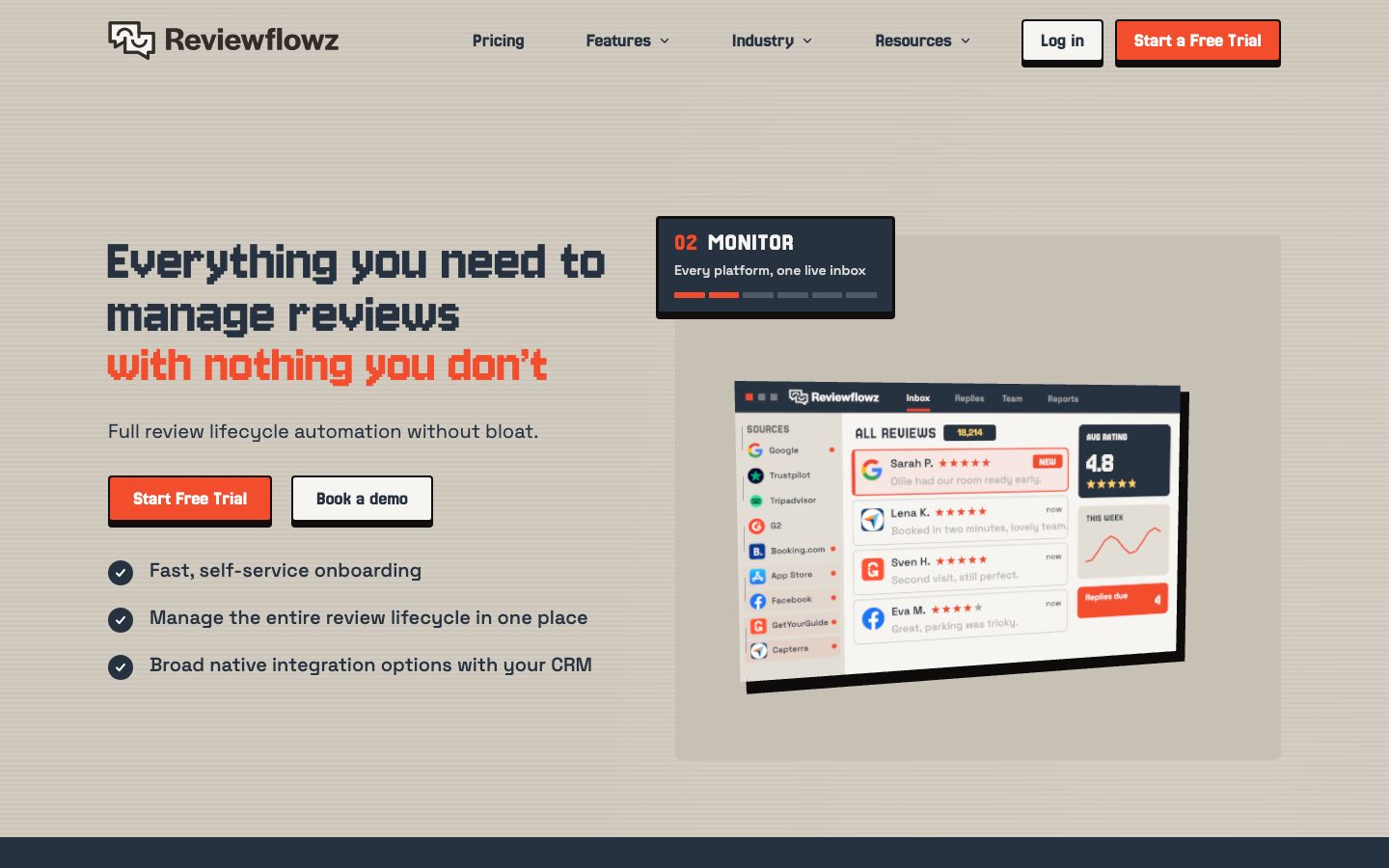
Reviewflowz is only about reviews. It watches them, asks for them, credits them to people and replies to them. It is built for the café group whose stores collect more reviews than a manager can answer between the morning rush and closing time, so the reply comes first.
Every reply starts from the ones your café posted before, so the AI copies your sign-off and the way you talk to regulars. A store can get an agent of its own. Rules you write by star rating, site, store, language or keyword decide which replies go out alone and which wait for a person, draft in hand.
Under those rules, replies to Google and Facebook reviews go out by themselves. For Yelp and Tripadvisor, Reviewflowz drafts the text and a person posts it. AI replies are unlimited, with no AI credits to buy. The review autoresponder page shows the rules in detail.

The AI also reads what every review says and files it under topics: the espresso, the wait at the counter, the baristas, the seating, the Wi-Fi. Each passage gets its own positive or negative score, so the store whose complaints are about the line stands apart from the one whose complaints are about the milk. Reports put the stores side by side (Premium).

Staff credit comes next, and it combines three methods (Premium). Reviewflowz reads the names in each review, nicknames and typos included. It matches the review to the payment in Square and credits the team member who took it, even when a walk-in card payment carried only a name. And each barista can have a personal link or QR code.
When you do ask for reviews, each store's QR code by the register sends every customer to that store's Google page, and a completed payment in Square can trigger a request by email, text or WhatsApp.
Reviewflowz is a small, self-financed company, and that shows in how it adapts. Ask for a review site your customers use, DoorDash for one, and it is added within two weeks. Integrations go deeper than a checkbox, custom work is possible, and you talk directly to the people who build the product.
You can cancel or downgrade in the app at any time, with no notice period. Prices start at $45 a month for a single location, billed yearly, and go down per location as you add stores. The 14-day trial needs no card.
#2 Ovation
- Best for: A quick-service coffee brand that mostly wants to text each guest a short survey after ordering, and win unhappy guests back by text.
- Pros:
- Texts two survey questions after each order placed through Toast or Square.
- Tags reviews and surveys positive or negative across 34 restaurant categories.
- Runs the Reviews page inside the SpotOn dashboard.
- Cons:
- Replies go out from Ovation on Google and Yelp only; Facebook opens on Facebook.
- AI drafts follow tone settings, not the replies you already posted.
- Renews yearly unless you send 60 days' written notice.
- G2: 4.0 out of 5 (1 review)
- Capterra: 4.9 out of 5 (19 reviews)
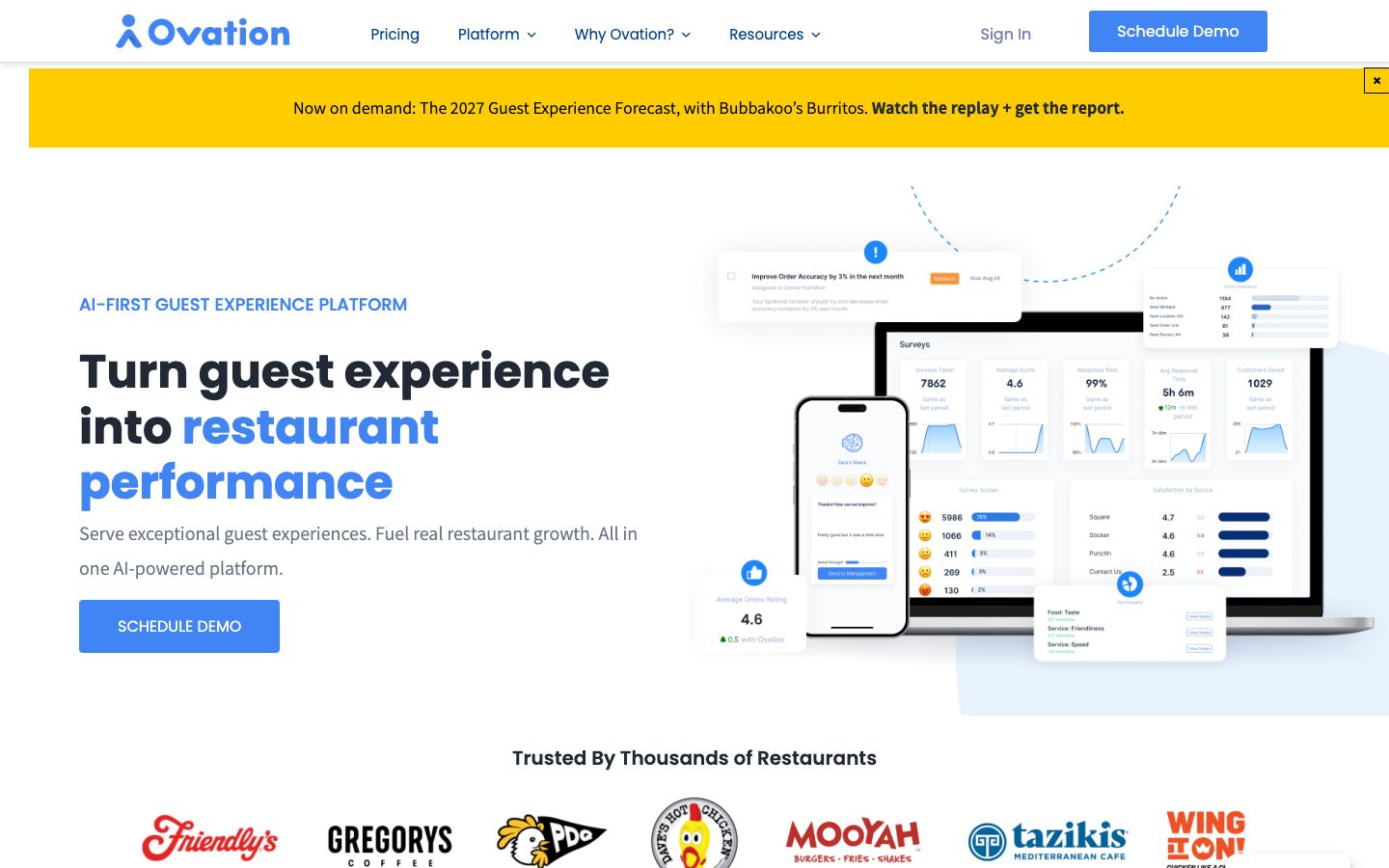
Ovation is guest feedback software for restaurant brands, and its customers buy it for the survey. After an order placed through Toast, or 30 minutes after a Square order, the guest gets a two-question text. Happy guests are pointed to Google and Yelp, while unhappy ones get a private way to complain.
Reviewflowz or Ovation?
Ovation automates its own survey, while each public review waits for a person to click AI Response. Reviewflowz sends out each store's Google and Facebook replies without a click, under rules you set, and drafts Yelp replies for you to post.
For a café's volume, Ovation answers Google and Yelp reviews from its feed with AI drafts shaped by tone settings, and sends you to the site for the rest. Topics are a strength: each review and survey answer is tagged with restaurant categories such as speed of service. Its leaderboard ranks locations, not baristas.
Ovation quotes each brand on request, and WebstaurantStore lists Ovation Base at $119 a month for its own users. Renewal is yearly, and stopping it means writing to your customer success manager 60 days ahead.
#3 Toast Reviews Agent
- Best for: A café that runs Toast at the counter and already pays for the Toast IQ Grow marketing package.
- Pros:
- Drafts a reply to every Google review inside Toast Web.
- Adds a Google review option to the receipts and confirmations Toast already sends.
- Cons:
- Google only, and only reviews from the last 30 days.
- No brand voice settings, and nothing posts until you approve it.
- Full access needs the Toast IQ Grow package at each location.
Toast sells its Reviews Agent inside Toast IQ Grow, its marketing bundle for restaurants. It invites guests to leave a Google review from the receipts and confirmations Toast already sends, brings Google reviews into Toast Web and drafts a response to each one. Toast runs at 28% of the US coffee shops and bakeries whose websites show their software, so for many owners it is the review tool already one click away.
It covers the first half of a café's review job on the first site. Every Google review without a response gets an AI draft, and a manager selects Approve & send. Facebook, Yelp and Tripadvisor reviews stay outside it, what customers say comes back as trend summaries, and the drafts take no tone or brand voice settings.
Toast sells IQ Grow on a custom quote, and each location needs the package for full access. A location without the package sees only a three-review preview on the Public reviews page.
#4 Tattle
- Best for: A coffee brand that wants a private survey after every visit and an AI action plan for each store manager.
- Pros:
- Surveys guests after every order, whatever channel the order came through.
- AI Coach turns feedback into an action plan for each franchisee and manager.
- Scooter's Coffee and Colectivo Coffee use it for guest feedback.
- Cons:
- Online review replies need the paid Reputation Management add-on.
- A person generates, reads and sends every reply.
- Tattle advises brands under 10 locations not to use it.
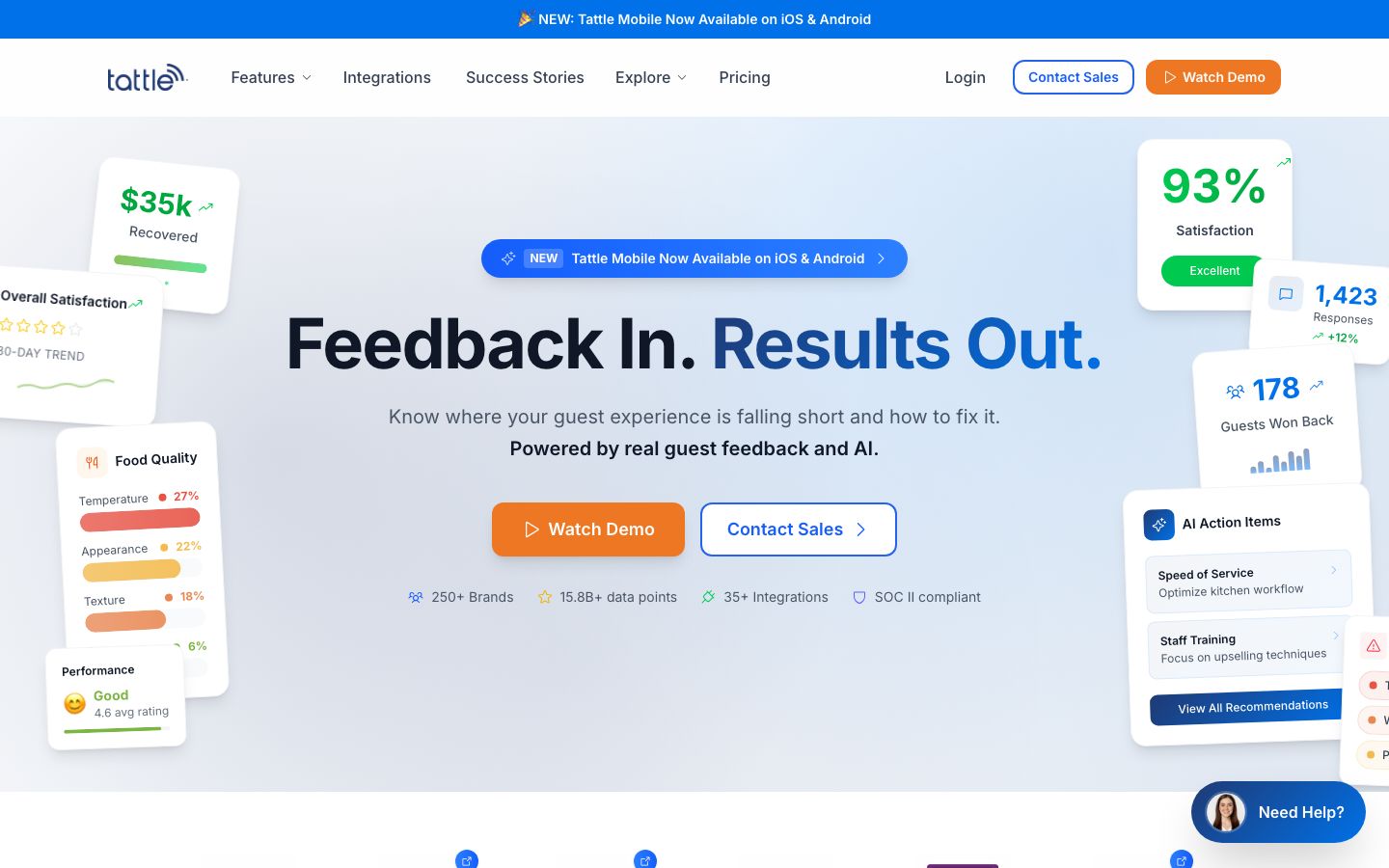
Tattle collects guest feedback for restaurant brands, and coffee chains feature prominently among its customers. Scooter's Coffee, with more than 900 drive-thru locations, chose it in 2026 to survey guests after each visit and measure their sentiment. Colectivo Coffee's chief operating officer says its feedback shows where the brand hits the mark and where it can improve.
Reviewflowz or Tattle?
Tattle sells online reviews as an add-on module, and someone on your team still generates and sends each reply. In Reviewflowz the replies to every café's Google and Facebook reviews post by themselves under your rules, written from the ones you posted before.
Its strength is the second half of a café's review job: reading what customers say. Smart Insights finds the issues behind the satisfaction scores, the survey asks about each order, and the AI Coach writes what each store should fix. Answering public reviews comes with the Online Reviews and Reputation Management add-ons, with AI drafts sent by hand.
Tattle builds a custom quote from your store count and the modules you pick, and the price per location falls as you add stores. The subscription renews on its own until you cancel by contacting Tattle, and the cancellation takes effect at the end of the paid term.
#5 Momos
- Best for: A coffee brand that wants website chat, loyalty offers and delivery-app feedback in the same inbox as its reviews.
- Pros:
- Posts AI replies by itself to Google, Facebook, Yelp, OpenTable and DoorDash reviews.
- Writes in your voice, learned from replies you posted before.
- Black Rock Coffee Bar runs its 134 stores' reviews through it.
- Cons:
- Order forms can't be cancelled, and the price rises 7% at each renewal.
- No published price and no free trial: a quote follows a demo.
- Google history starts 90 days before you connect.

Momos is guest feedback software for restaurant and food chains, with reviews, surveys and delivery-app feedback in one inbox. Coffee chains run through its case studies. Black Rock Coffee Bar answers reviews for its 134 stores with it, and the operator of 41 Caribou Coffee stores in the Gulf reports 61% more Google reviews.
Reviewflowz or Momos?
Momos backfills 90 days of Google reviews when you connect, and offers no Google Sheets sync. Reviewflowz brings in a connected Google listing's whole history and keeps every review in Google Sheets, so this winter's complaints about the line sit next to last winter's.
It does the volume job well. The agent posts replies on its own, by star rating and by site, and learns from the replies you already posted. Topics and sentiment come per review and per passage, with leaderboard snapshots of top and bottom stores. Baristas are rated only when a surveyed guest picks one.
Pricing comes after a demo. Each order form rolls into a new year at 7% more, unless written notice arrives 30 days ahead.
#6 Dripos Review Agent
- Best for: An independent coffee shop that already rings up every order on Dripos.
- Pros:
- Follows up with each paying customer by email or text, straight from the POS.
- Drafts each Google reply from the text of that review.
- Cons:
- Its pages name Google as the only review site it reads.
- Costs $50 a month per store on top of the Dripos subscription.
Dripos is a point of sale built only for coffee shops, and it says it powers 3% of independent US coffee shops. Its Review Agent, launched in October 2026, follows up after each visit with every customer who paid and left an email address or a mobile number. Customers rate the visit privately first, and every one of them is then offered a Google review.
Try it on your own café's reviews
Try it free for 14 days with no card: add each store's review sites and read AI drafts for your latest reviews.
For replies it stays on Google. Every review synced from Google is listed on the Reviews tab with a draft written from that review's own text, and Send publishes the reply under it. A dashboard shows the Google rating, the review count and a satisfaction score from the private ratings, and a group can filter it by store.
The Review Agent costs $50 a month per store, a separate line on the Dripos bill. The core POS subscription is $160 a month.
#7 Marqii
- Best for: A café that wants its menu, hours and specials pushed from the POS to Google and the delivery apps.
- Pros:
- Syncs menus and listings from Toast, Square, Clover or SpotOn.
- Answers Yelp, Facebook and Google reviews in a single feed.
- Cons:
- AI reply suggestions start on the Scale plan, at $180 a month per location.
- The 12-month term can't be cancelled; stopping renewal takes 90 days' notice.
- G2: 5.0 out of 5 (1 review)
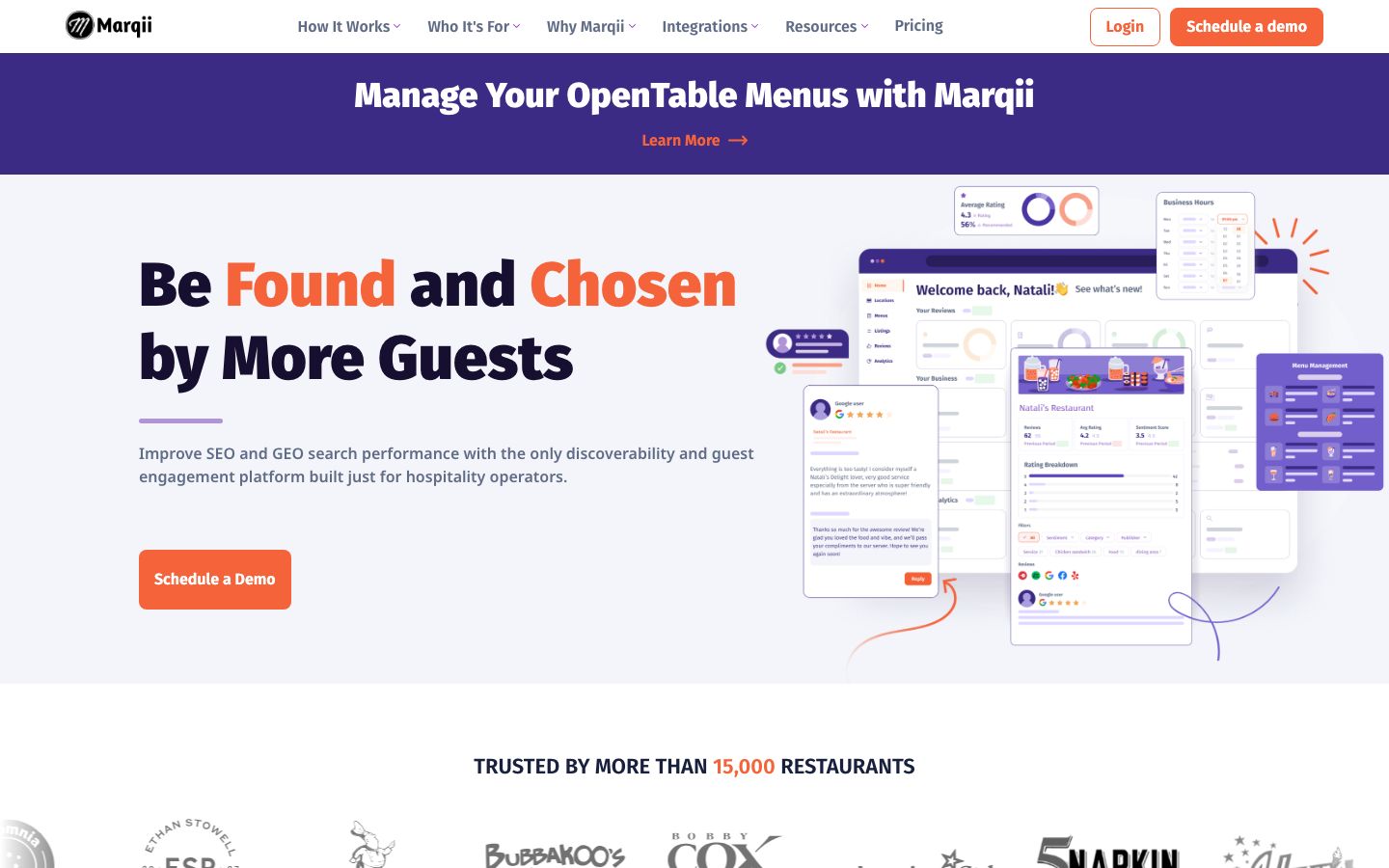
Marqii is listings and menu software built for hospitality, with reviews in the same dashboard. Gregorys Coffee used it while the chain grew from 36 to 54 stores. The brand reports 28% more appearances in searches for coffee near me.
Reviewflowz or Marqii?
At Marqii, AI reply suggestions start on the Scale plan and replies that go out by themselves come with the top plan. Reviewflowz writes each café's replies from the ones you posted and sends them out under your rules, with no plan upgrade for it.
For a café's volume, Marqii replies to Yelp, Google and Facebook reviews from inside the app and drafts text for the sites where it can't post. Its sentiment covers four fixed categories plus keywords. Its Review Generation texts guests who order through a Marqii partner.
Prices are published per location on an annual contract, and Growth, the first plan with reviews, is $145 a month. The term runs 12 months, cannot be cancelled and renews unless you give 90 days' written notice.
#8 Birdeye
- Best for: A café owner who wants reviews, listings, a texting inbox and payments from one vendor, bought through sales.
- Pros:
- AI agents reply by rules on Google, Facebook and Yelp.
- Listed in Toast's partner directory, with requests sent from Toast orders.
- Tags topics and scores sentiment for each passage of a review.
- Cons:
- Its Toast trigger reaches takeout and delivery customers only.
- Contracts can't be cancelled during the term; 90 days' notice to stop renewal.
- Of 160 negative reviews, 55 complain about the contract or about cancelling.
- G2: 4.7 out of 5 (4,327 reviews)
- Capterra: 4.7 out of 5 (712 reviews)
- Trustpilot: 3.5 out of 5 (688 reviews)
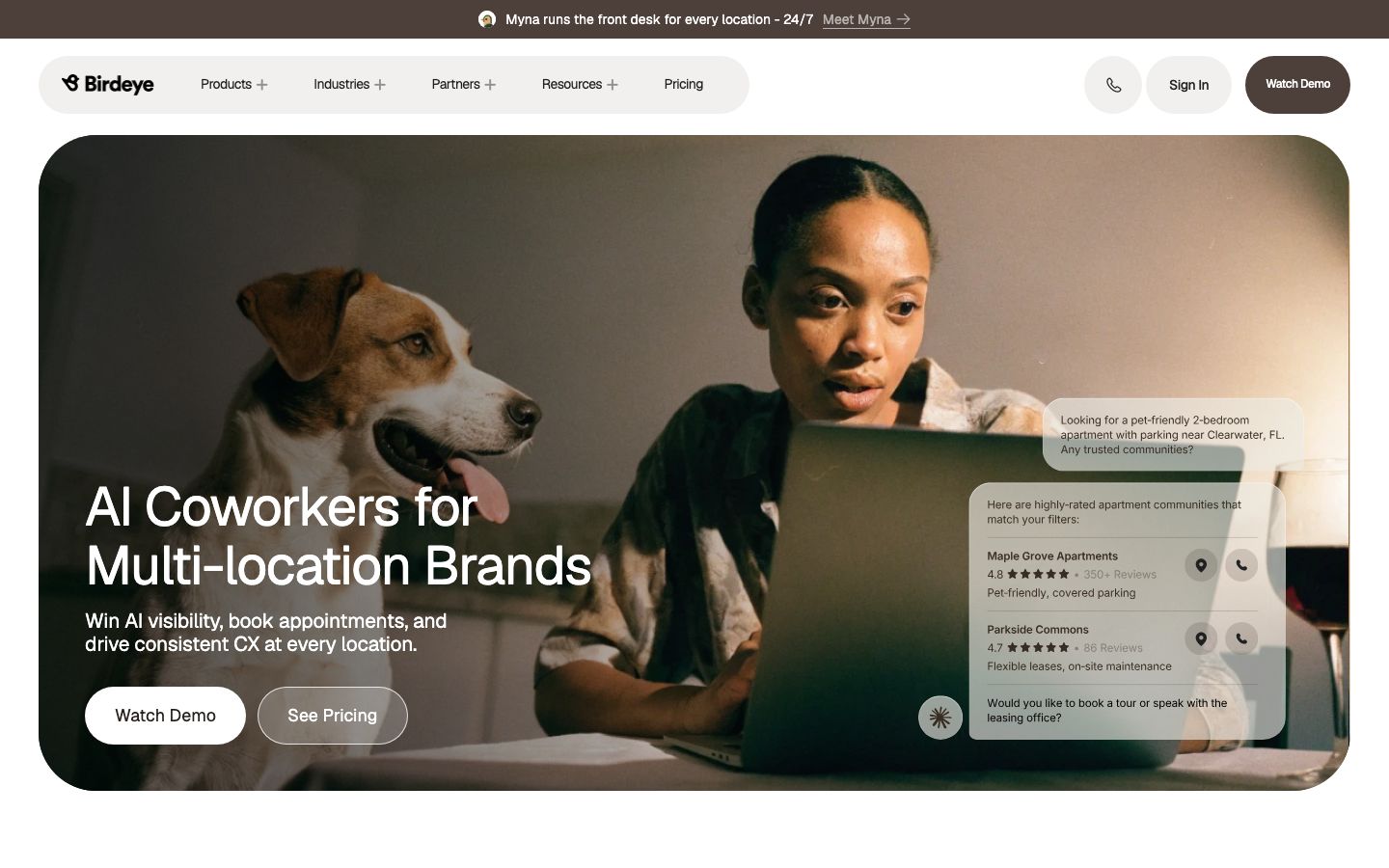
Birdeye packs reviews into a suite of 21 products, with listings, messaging, social posting, surveys and payments beside them, sold through demos. Of 572 positive reviews of Birdeye read on software review sites, 315 praise how easy it is to use. Toast lists it as a partner, and its restaurant page promises a consistent guest experience at every location.
Reviewflowz or Birdeye?
Birdeye bundles reviews into a platform of 21 products sold through a demo. Reviewflowz is review software only, so a café pays for answering and reading its reviews, not for listings, texting or a chatbot.
On volume it covers the job: response agents post replies by rules, and Insights AI tags topics and scores each snippet. Its Toast trigger fetches customer details only for takeout and delivery orders, so an order taken at the counter does not reach its requests.
Birdeye quotes by location after a form, and a third-party site puts it at $299 a month per location. Renewal is automatic and the term can't be cancelled. Ending it requires written notice 90 days before renewal, and every renewal adds an 8% fee.
#9 Yext
- Best for: A national coffee brand that buys listings and store pages from one vendor.
- Pros:
- Replies to Yelp, Google and Facebook reviews, automatically or once someone approves.
- Caribou Coffee gathered more than 142,000 new reviews after joining it in 2017.
- Cons:
- Built for large enterprises; smaller businesses are sent to resellers.
- Subscriptions can't be cancelled during the term.
- AI replies need the Review Response package.
- G2: 4.4 out of 5 (1,121 reviews)
- Capterra: 4.2 out of 5 (117 reviews)
- Trustpilot: 1.5 out of 5 (342 reviews)
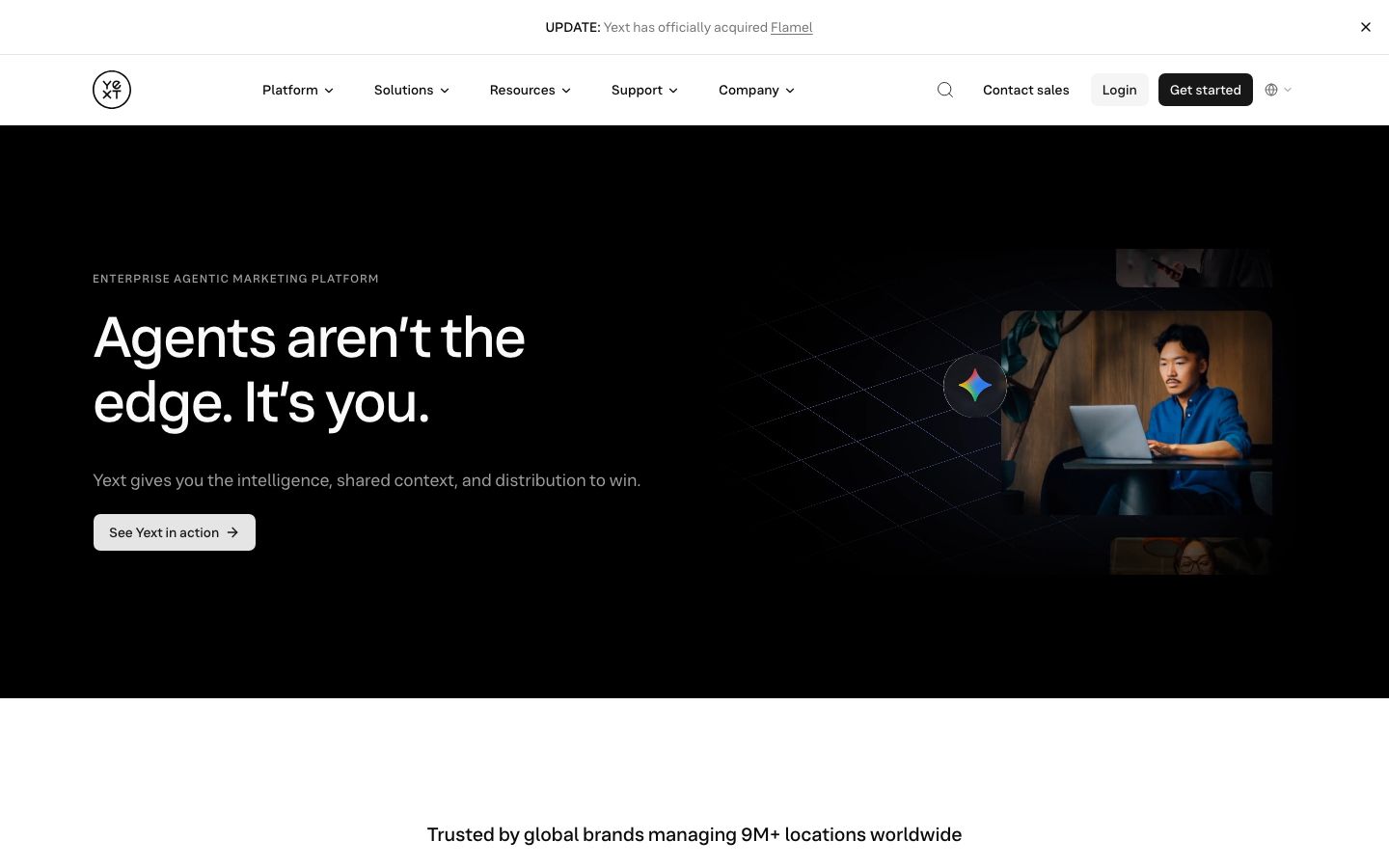
Yext is listings software for large brands, with reviews sold as monitoring, response and request packages. Its food page promises franchise scale with local flexibility. Caribou Coffee is its coffee case study: the chain monitors and responds to reviews through it.
Reviewflowz or Yext?
Yext runs one set of AI reply instructions for the whole account. In Reviewflowz each store can have its own reply agent, so the airport kiosk and the neighborhood café each sound like themselves.
For the volume, it answers reviews on Google, Facebook and Yelp, posts by rules or waits for approval, and Journey Intelligence scores sentiment per passage. Its strength is the listing itself: hours, menus and store pages kept the same on every site a customer checks.
Yext prices by location count on a custom quote, billed yearly, and proposes multi-year terms by default. There is no free trial, and purchased subscriptions cannot be cancelled.
#10 SOCi
- Best for: A coffee brand whose marketing team posts local social content and keeps hours current for each store.
- Pros:
- Its reputation agent replies on Google, Yelp, Facebook and Tripadvisor.
- Voice of Customer pulls quotes and scores sentiment per passage.
- Scooter's Coffee runs local marketing for its 900 locations on it.
- Cons:
- Priced for brands with hundreds of locations, on a custom quote.
- Order forms can't be cancelled for convenience.
- G2: 4.5 out of 5 (5,058 reviews)
- Capterra: 4.5 out of 5 (251 reviews)
- Trustpilot: 4.5 out of 5 (115 reviews)

SOCi is marketing software for large brands: listings, local pages, social posts, surveys and reviews, run by AI agents. Its restaurant page names cafés and coffee shops among its users. Its case study shows Scooter's Coffee running local marketing across 900 locations.
Reviewflowz or SOCi?
SOCi reports reviews by account, group or location and goes no further. Reviewflowz names the barista behind each review, from the name a customer wrote or the payment in Square (Premium).
On volume, the Genius Reputation Agent answers reviews without anyone logging in and learns from the edits you approve. Voice of Customer pulls the passages behind each topic. Reviews are one skill among several, priced by the agents you deploy.
SOCi quotes from your location count and the agents you deploy, and its terms allow no cancelling for convenience. Its listing on the AWS Marketplace sets a minimum of 100 locations.