
Review Management Software for OpenEMR users
Turn every OpenEMR patient encounter into review requests. Monitor Google, Healthgrades, and 200+ medical review sites with automated AI responses.
They love how easy we've made it






Automated review requests from OpenEMR patient visits
Reviewflowz automatically sends review requests when you complete patient visits, discharge patients, or finish follow-ups in OpenEMR. Configure once which trigger events you want (visit completion, discharge, follow-up), choose your communication method (email, SMS, or WhatsApp), and every patient gets asked for feedback without any manual work. Your front desk staff won't need to remember to ask, and you won't miss opportunities during busy clinical days. The system handles patient outreach while you focus on medical records and patient care. Email requests cost just $5 per 1,000 sent.

Track your biggest patient advocates in OpenEMR records
When patients leave 5-star reviews on Google or Healthgrades, that information appears directly in their OpenEMR patient record for future reference. Your clinical team instantly knows which patients are your strongest advocates during appointments and follow-up visits. Use this data to ask satisfied patients for referrals, video testimonials, or detailed case studies for your practice marketing. Most healthcare providers never identify their happiest patients systematically. This integration gives you that competitive advantage by flagging patient advocates right in your EHR workflow where your staff will actually see it.

See what is actually moving your rating
Connect one location and look at your own data. About five minutes, and your review history comes with it.
Staff review attribution without asking patients to name doctors
Reviewflowz automatically assigns patient reviews to the correct physician, nurse practitioner, or clinical staff member using OpenEMR encounter data. No need to ask patients to mention provider names in their reviews, which Google often flags as unnatural. The system already knows Dr. Smith handled the cardiology consultation and Nurse Johnson managed the follow-up care. When reviews arrive, they're attributed to the right clinicians automatically. You get clean performance data for staff evaluations, bonus calculations, and coaching conversations. Reviews sound more authentic because patients write naturally instead of forcing provider names into their feedback.
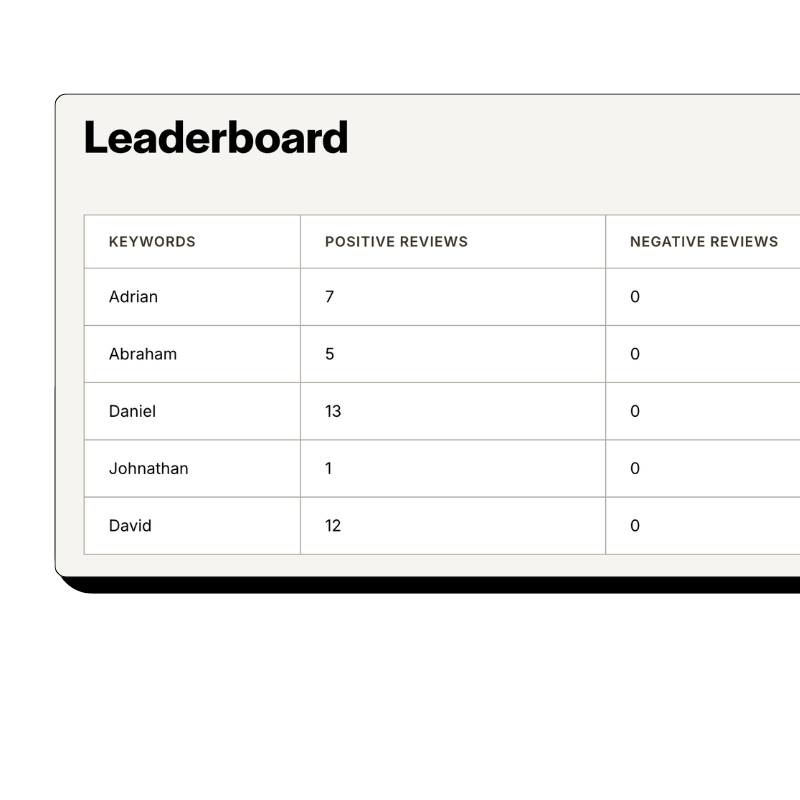
Calculate review conversion rates from OpenEMR patient volume
Your review conversion rate matters more than total review count for measuring performance. Reviewflowz calculates this automatically by dividing reviews collected by total patient encounters from your OpenEMR system. A practice with 75 reviews from 1,500 patient visits (5% conversion) outperforms one with 200 reviews from 8,000 encounters (2.5% conversion). The average Reviewflowz customer achieves 7.5% conversion rates. You'll see exactly how many patient encounters happened each month, how many reviews resulted, and which providers or locations convert best. This data helps optimize your reputation management strategy based on actual patient volume, not vanity metrics.
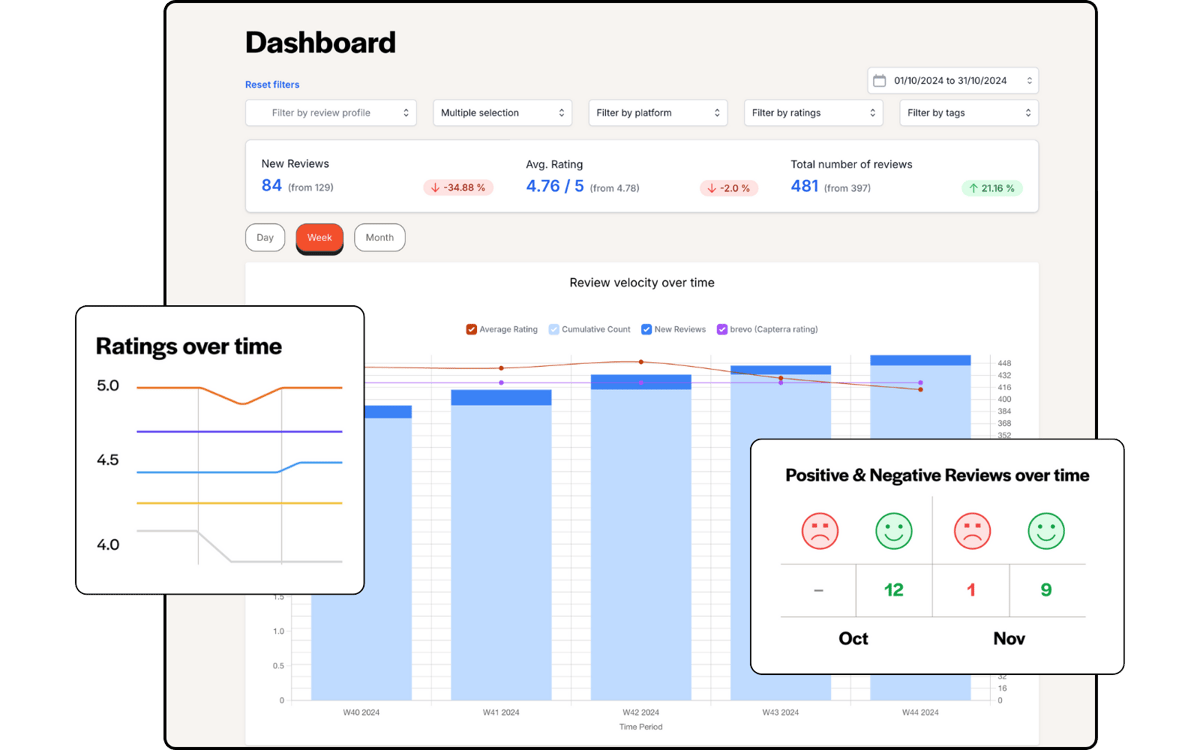
AI-powered replies to Google and Healthgrades reviews
Reviewflowz generates professional responses to every patient review across Google, Healthgrades, Vitals, Zocdoc, and 200+ other platforms using AI trained on healthcare communication. Responding to reviews improves your local search rankings and builds trust with prospective patients researching your practice. The AI writes in your practice's voice and tone, addressing both positive feedback and patient concerns appropriately. You can approve responses manually or set them to publish automatically. Most OpenEMR practices lack time to reply consistently while managing patient charts, clinical workflows, and documentation requirements. This automation ensures no review goes unanswered.

Start replying today
Your review history imports the moment you connect, so there is something to reply to from the first minute.
FAQs
What review platforms matter most for OpenEMR medical practices?
Google Reviews is the top priority since it directly impacts local search rankings when patients search for healthcare providers in your area. However, medical-specific platforms like Healthgrades, Vitals, Zocdoc, and WebMD carry equal weight because patients actively research doctors on these sites before booking appointments. These platforms influence referral patterns and domain authority within healthcare search results. Reviewflowz monitors Google plus these key medical review sites and 200+ other platforms from one dashboard, ensuring your OpenEMR practice maintains strong reputation management across every channel that impacts patient acquisition and retention.
How do you measure OpenEMR practice review performance effectively?
Review conversion rate is the key metric, calculated as total reviews divided by total patient encounters. Because Reviewflowz integrates with OpenEMR, it automatically tracks your patient volume to calculate this rate accurately. A practice with 60 reviews from 800 patient visits (7.5% conversion) significantly outperforms one with 150 reviews from 4,000 encounters (3.8% conversion). Raw review counts are misleading without context of patient volume. The system shows monthly encounter totals, resulting reviews, and conversion rates by provider, location, and time period for actionable insights into your reputation management performance.
How are review requests triggered from OpenEMR appointments?
Review requests automatically trigger when you complete specific actions in OpenEMR that you configure during setup. Common triggers include marking patient visits complete, processing patient discharges, or finishing follow-up appointments. You select which OpenEMR events should send requests and choose your preferred communication method (email, SMS, or WhatsApp). Once configured, every patient automatically receives review requests without manual intervention from clinical or administrative staff. The integration handles patient outreach while you focus on medical documentation and patient care workflows. Setup takes under 15 minutes with no developer assistance required.
Can OpenEMR practices send review requests through WhatsApp?
Yes, Reviewflowz supports WhatsApp review requests alongside email and SMS options for OpenEMR practices. WhatsApp achieves nearly 98% open rates compared to roughly 20% for traditional email, making it significantly more effective for patient engagement. Like other messaging channels, WhatsApp requests trigger automatically from OpenEMR when you complete visits, discharge patients, or finish follow-ups. Pricing varies by country but follows the same pay-as-you-go model with no monthly minimums or contracts. Many international patients and younger demographics prefer WhatsApp communication over email or SMS.
How does provider review attribution work with OpenEMR integration?
Reviewflowz automatically attributes patient reviews to the correct physician, nurse practitioner, or clinical staff member using encounter data from your OpenEMR system. When patients leave reviews, the system matches them to the provider who handled their care without requiring patients to mention names explicitly. This approach prevents Google from flagging reviews that specifically name staff members, which often get removed as promotional content. You receive detailed performance tracking for each provider showing review volume, ratings, and conversion rates. This data supports staff evaluations, bonus calculations, and coaching discussions based on actual patient feedback attribution.
How long does OpenEMR and Reviewflowz integration setup take?
Setup typically completes in under 15 minutes without requiring developer assistance or IT department involvement. You connect your OpenEMR system to Reviewflowz, select which patient encounter events should trigger review requests (visit completion, discharge, follow-up), and choose your preferred communication channel (email, SMS, or WhatsApp). The integration goes live immediately, and your first automated review requests begin sending the same day. No complex technical configuration or lengthy implementation timeline is required. Most practices start collecting reviews within hours of completing the initial setup process.
What are the costs for OpenEMR practice review request campaigns?
Email review requests cost $5 per 1,000 emails sent, and SMS requests cost $5 per 100 SMS messages on a pay-as-you-go basis. WhatsApp pricing varies by country but follows the same model. There are no monthly minimums, setup fees, or long-term contracts required. For most OpenEMR practices, this works out to just pennies per review collected. A practice sending 500 email requests monthly pays $2.50, while 50 SMS requests cost $2.50. You only pay for messages actually sent, making it cost-effective for practices of any size to implement automated review collection campaigns.